Vili and Vé: The Forgotten Gods of Norse Creation
In the mythological framework preserved in medieval Icelandic texts, Vili and Vé belong to the early generation of the Æsir, the divine group that ultimately comes to dominate the Norse pantheon. They appear primarily in cosmogonic narratives rather than later myth cycles, suggesting that their importance lies in creation rather than ongoing divine governance.
The main sources for their existence are the Poetic Edda and Snorri Sturluson’s Prose Edda, both compiled in 13th-century Iceland from older oral traditions. As with much Norse mythology, the preservation of these figures is fragmentary, and their roles must be reconstructed from limited references.
Sources and Preservation
Unlike Óðinn, Þórr, or Freyr, Vili and Vé do not appear frequently in surviving mythological poetry. Their significance is concentrated in a small number of key episodes, most notably the creation of the world and the shaping of the first humans. This suggests either that their cultic importance diminished over time or that their functions were absorbed into the figure of Óðinn as the mythology evolved.
The Creation of the World
The most important myth involving Vili and Vé concerns the slaying of the primordial giant Ymir. According to tradition, Óðinn and his brothers Vili and Vé kill Ymir and use his body to construct the world.

Ymir is attacked by the brothers Odin, Vili, and Vé in an illustration by Lorenz Frølich.
The Body of Ymir
Ymir’s flesh becomes the earth, his blood forms the seas, his bones become mountains, and his skull is raised to form the sky. This cosmological transformation reflects a widespread Indo-European motif in which the cosmos is formed from the body of a primordial being.
Vili and Vé participate directly in this act, sharing responsibility for the ordering of chaos into structured existence. While Óðinn is often emphasised in later tradition, early accounts present the three brothers as a collective force in world creation.
The Formation of Midgard
From Ymir’s eyelashes, the gods construct Midgard, the fortified realm of humanity. This act establishes the boundary between human order and the surrounding chaos of Jǫtunheimr, the land of the giants. The participation of Vili and Vé in this process indicates their foundational role in shaping the structured cosmos.
Vili, Vé, and Óðinn
The triadic relationship between Óðinn, Vili, and Vé is central to understanding their mythological function. While interpretations vary, some scholars suggest that the three represent complementary aspects of divine power rather than strictly individual deities.

A depiction of Óðinn, Vili, and Vé creating the world by Lorenz Frølich
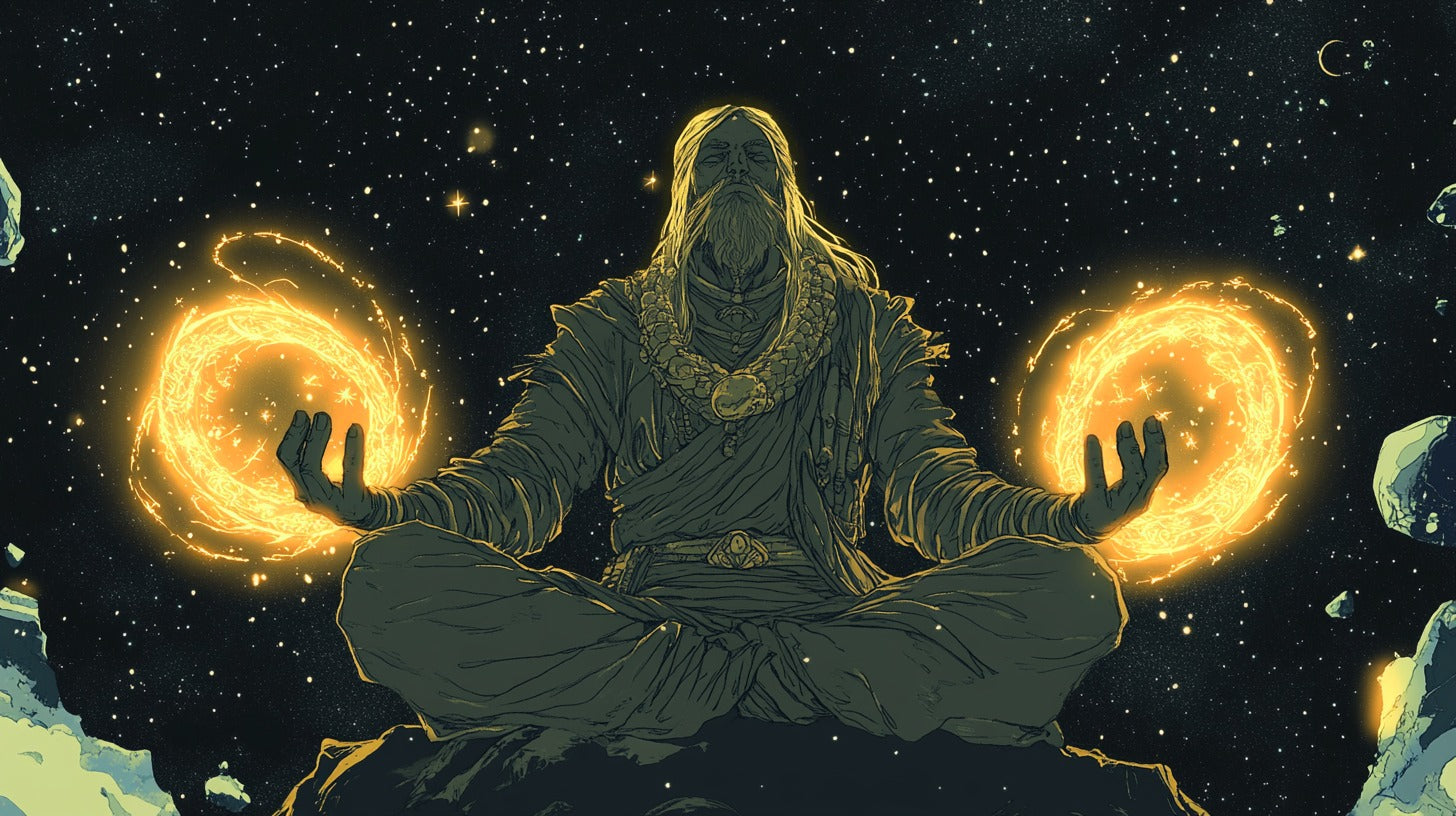
Mind, Breath, and Sacred Fire
In Snorri Sturluson’s account of the creation of humanity, each brother contributes a distinct gift. Óðinn gives óðr, often interpreted as mind or inspiration. Vili gives will or consciousness. Vé provides physical form and senses, sometimes associated with sacred space or ritual sanctity.
These divisions suggest an attempt by medieval authors to systematise older traditions into a coherent theological structure. Whether this reflects pre-Christian belief or later intellectual synthesis remains debated, but the triad clearly reflects an understanding of human existence as composed of multiple interrelated forces.
The First Humans
One of the most significant surviving myths involving Vili and Vé is the creation of the first humans, Ask and Embla. According to tradition, the gods find two tree trunks on the shore and transform them into human beings.
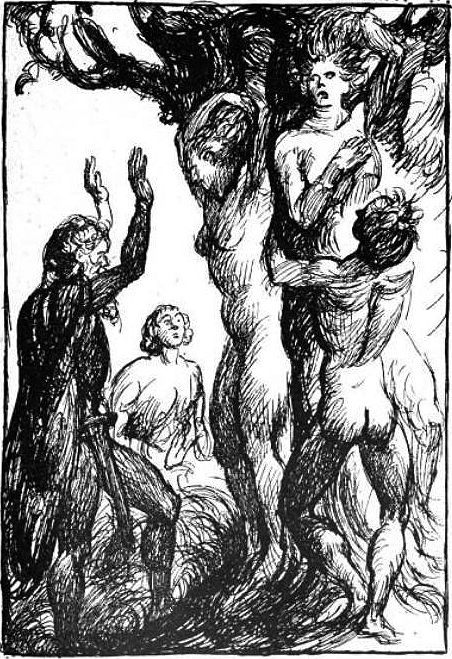
A depiction of Ask and Embla (1919) by Robert Engels.
Gifts of Life and Consciousness
Óðinn gives breath and spirit, Vili gives movement and intellect, and Vé grants form, speech, and sensory capacity. This act establishes humanity as distinct from inert matter, animated through divine intervention.
The involvement of Vili and Vé in this process reinforces their role as co-creators of human existence alongside Óðinn. However, unlike Óðinn, they do not appear in later myth cycles, suggesting that their function was primarily cosmogonic.
Later Silence in the Sources
After the creation narratives, Vili and Vé largely disappear from surviving mythology. They are not active participants in the later divine conflicts leading to Ragnarǫk, nor do they feature prominently in cultic descriptions.

Elder Futhark Norse Viking Arm Ring Bangle
The Dominance of Óðinn
One common scholarly explanation is that Óðinn gradually absorbed the roles of his brothers as his cult became more dominant in later Viking Age religion. As a result, Vili and Vé may represent earlier or parallel conceptions of divine power that were eventually subsumed into a more centralised mythological system.
Interpretation and Scholarship
Modern interpretations of Vili and Vé vary widely. Some scholars view them as genuine remnants of an older mythological structure in which divine power was distributed among multiple figures. Others suggest they are literary constructs introduced by later authors attempting to systematise fragmented oral traditions.
There is no consensus, largely because the source material is limited. What is clear is that their presence in the earliest cosmological myths indicates that they once held significant explanatory importance in the Norse understanding of creation and humanity.
Conclusion
Vili and Vé occupy a foundational but elusive place in Old Norse mythology. Though they appear only briefly in surviving sources, their role in the creation of the world and humanity positions them at the core of Norse cosmology. Their disappearance from later myth cycles suggests either the consolidation of divine roles under Óðinn or the fading of older traditions into obscurity. As such, Vili and Vé remain key figures for understanding how medieval Scandinavians conceptualised creation, consciousness, and the structure of the cosmos.
Frequently Asked Questions (FAQs)
Who were Vili and Vé?
They were brothers of Óðinn in Norse mythology who helped create the world and humanity.
What did Vili and Vé do in creation myths?
They participated in killing Ymir and forming the world from his body.
Why are they less famous than Óðinn?
They disappear from later myths, likely due to Óðinn’s increasing dominance.
What did they give humans?
Alongside Óðinn, they gave breath, intellect, senses, and form to Ask and Embla.
Are Vili and Vé worshipped?
There is no clear evidence of a dedicated cult for them in surviving sources.
References
Poetic Edda
Snorri Sturluson, Prose Edda
Rudolf Simek, Dictionary of Northern Mythology
John Lindow, Norse Mythology
Andy Orchard, Norse Myth and Legend
H. R. Ellis Davidson, Gods and Myths of Northern Europe





Leave a comment
This site is protected by hCaptcha and the hCaptcha Privacy Policy and Terms of Service apply.