Ask and Embla: The Creation of Humanity in Old Norse Mythology
The story of Ask and Embla is preserved primarily in the medieval Icelandic texts known as the Poetic Edda and Snorri Sturluson’s Prose Edda. These works were written in the 13th century but preserve older poetic traditions that likely circulated orally during the Viking Age and earlier.
In both accounts, Ask and Embla appear in a cosmogonic context immediately following the creation of the world. Their story is brief but highly significant, serving as the origin point of human existence within the mythological system.
The Discovery of Ask and Embla
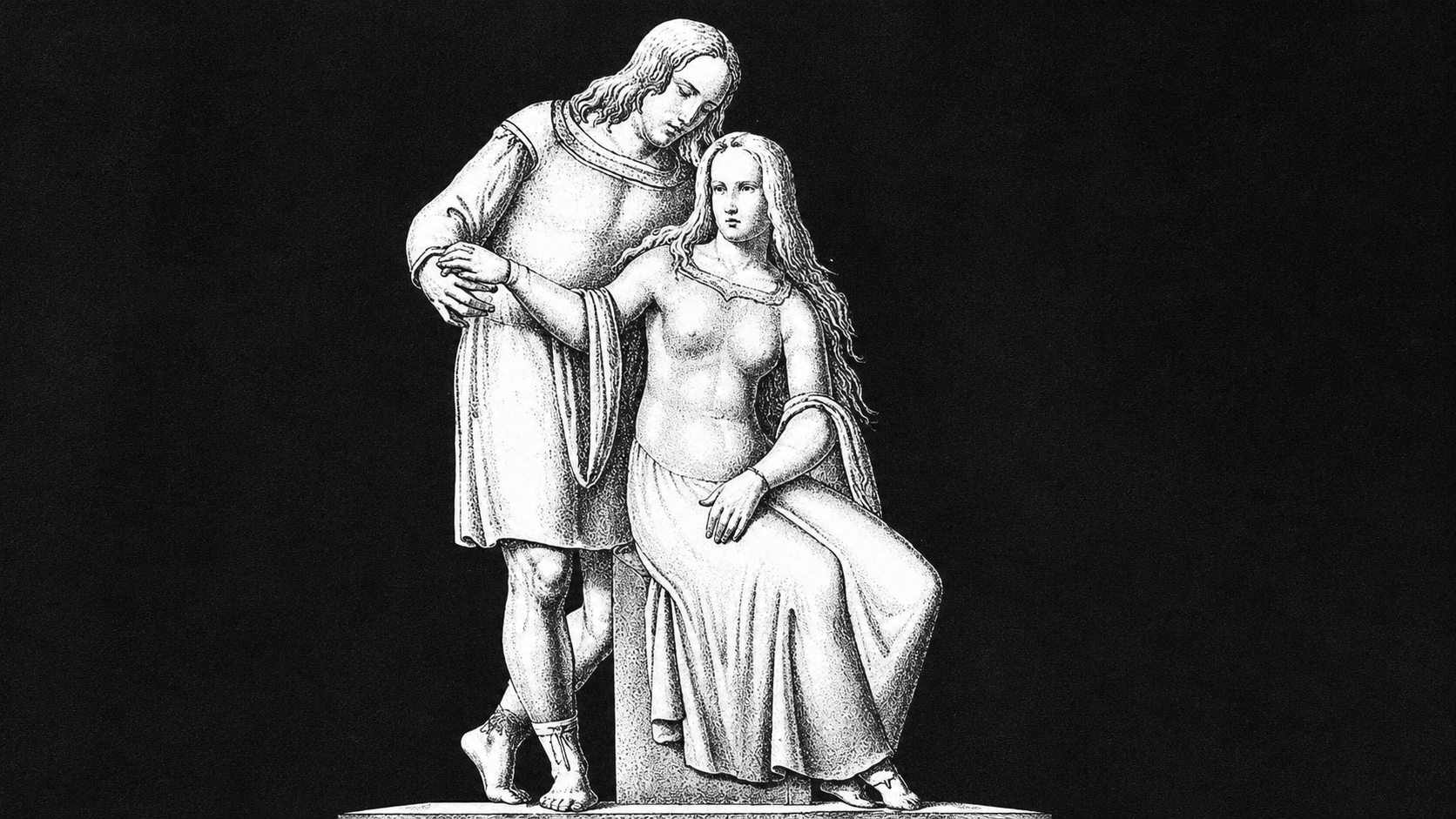
According to tradition, three gods—Óðinn, Vili, and Vé—walk along a shoreline and encounter two tree forms. These beings are described as lifeless or unformed, lacking destiny and consciousness. The gods then shape them into the first man and woman.
The Shoreline Motif
The shoreline setting is significant within broader Indo-European mythological patterns. Coastal or liminal spaces often represent transitional zones between chaos and order, nature and culture, or unformed matter and structured existence. Ask and Embla’s origin at the boundary of land and sea reflects this symbolic transformation from raw material into human life.
The Gifts of the Gods
The transformation of Ask and Embla is completed through a series of divine gifts. Each god contributes a distinct aspect of human existence, turning inert matter into conscious beings capable of thought, movement, and speech.
Óðinn, Vili, and Vé
Óðinn grants óðr, often understood as breath, spirit, or inspired mind. Vili provides will and conscious movement, while Vé gives physical form, speech, and sensory perception. Together, these gifts establish the full structure of human existence as understood in Old Norse cosmology: body, mind, and animating spirit.
This division of functions suggests an attempt by medieval authors to conceptualise humanity as a composite being rather than a single unified substance, reflecting broader philosophical influences present in medieval Scandinavian literary culture.
Meaning and Interpretation
The myth of Ask and Embla belongs to a wider tradition of anthropogony, or origin-of-humanity narratives, found across Indo-European cultures. The idea that humans are formed from natural materials is not unique to Norse mythology, but the specific use of trees reflects the symbolic importance of wood in northern European environments.
Trees and Human Origins
The identity of Ask and Embla as trees has led to frequent comparisons with Yggdrasill, the cosmic ash tree central to Norse cosmology. While Ask is often interpreted as an ash tree, Embla’s exact botanical identity is less certain, with suggestions ranging from elm to vine. The uncertainty reflects the fragmentary nature of the source material.
What remains consistent is the transformation of organic material into sentient beings through divine intervention, reinforcing a worldview in which humanity is both part of nature and distinct from it through the influence of the gods.
Scholarly Perspectives
Modern scholars generally agree that the Ask and Embla myth preserves elements of older oral tradition, though its exact origins remain uncertain. Some interpret the figures as symbolic representations of humanity’s connection to the natural world, while others emphasise the structured theological framework imposed by later Christian-era authors such as Snorri Sturluson.
Despite these interpretive differences, Ask and Embla remain central to understanding Norse conceptions of human origin, identity, and divine involvement in the natural world.
Conclusion
Ask and Embla represent the foundational moment in Norse mythology when humanity is brought into existence through divine action. Formed from trees and endowed with life by the gods, they embody a worldview in which human beings exist at the intersection of nature and divinity. Their brief but significant appearance in the sources highlights the importance of creation narratives in shaping Norse cosmological thought.
Frequently Asked Questions (FAQs)
Who were Ask and Embla?
They were the first humans in Norse mythology, created by the gods from trees.
Who created Ask and Embla?
Óðinn, Vili, and Vé are described as their creators.
What were Ask and Embla made from?
They were formed from trees found on a shoreline.
What did the gods give them?
They were given breath, intellect, senses, and form.
Where is their story recorded?
Their story appears in the Poetic Edda and Prose Edda.
References
Poetic Edda
Snorri Sturluson, Prose Edda
Rudolf Simek, Dictionary of Northern Mythology
John Lindow, Norse Mythology: A Guide to the Gods, Heroes, Rituals, and Beliefs
Andy Orchard, Dictionary of Norse Myth and Legend
H. R. Ellis Davidson, Gods and Myths of Northern Europe




Leave a comment
This site is protected by hCaptcha and the hCaptcha Privacy Policy and Terms of Service apply.