The Amal Dynasty: Royal Lineage of the Ostrogoths in Late Antiquity
The Amal dynasty, also known as the Amali or Amalings, served as the ruling family of the Ostrogoths from the 4th century CE through the early 6th century CE. This East Germanic lineage claimed descent from legendary figures and rose to prominence following the collapse of Hunnic hegemony in the mid-5th century. Under Theodoric the Great, the Amals established a kingdom in Italy that blended Roman administrative traditions with Germanic military structures, lasting from 493 CE until its fall during the Byzantine reconquest. The dynasty's history intertwines with broader Migration Period events, including interactions with the Roman Empire, Huns, and related tribes like the Gepids and Visigoths.
Primary sources include Jordanes' Getica, composed around 551 CE in Constantinople, which provides a detailed genealogy and narrative based on Cassiodorus' lost Gothic history. Procopius' Wars offers Byzantine perspectives on the later Amals, while Cassiodorus' Variae preserves official documents from Theodoric's court. Archaeological evidence, such as Ravenna's monuments, supports textual accounts. However, the early genealogy remains uncertain, blending oral traditions with possible inventions for political legitimacy, as noted by scholars like Herwig Wolfram.
Legendary Origins
Jordanes' Getica traces the Amal line to semi-mythical ancestors, reflecting Gothic oral histories preserved through generations. The genealogy begins with Gapt, whom Jordanes identifies as a divine figure akin to Mars, begetting Hulmul. Hulmul fathered Augis, who in turn sired Amal, the eponymous founder from whom the dynasty derived its name. This Amal begat Hisarnis, continuing the line through Ostrogotha, Hunuil, and Athal.
These early figures lack corroboration from contemporary Roman sources, leading historians to view them as legendary constructs. Jordanes, drawing from Cassiodorus, likely incorporated heroic tales to elevate the Amals above rival Gothic clans. The narrative equates the Goths with ancient peoples like the Getae and Scythians, a common antiquarian practice in late antiquity to claim prestigious heritage.
Pre-Hunnic Period
By the 4th century CE, the Amals had emerged as leaders among the Ostrogoths settled east of the Dniester River near the Black Sea. Ermanaric, also spelled Hermanaric, ruled a vast kingdom extending from the Baltic to the Black Sea around 350–375 CE. Ammianus Marcellinus describes him as a formidable warrior-king who expanded through conquests against neighboring tribes, including the Heruli.
Ermanaric's reign ended tragically with the Hunnic invasions beginning in 375 CE. According to Jordanes, the king committed suicide after defeats, though Ammianus attributes this to wounds from a treacherous attack by the Rosomoni. The Amal dynasty's link to Ermanaric remains debated; Ammianus does not explicitly connect him to the Amals, suggesting possible later interpolation by Cassiodorus to bolster Theodoric's lineage.

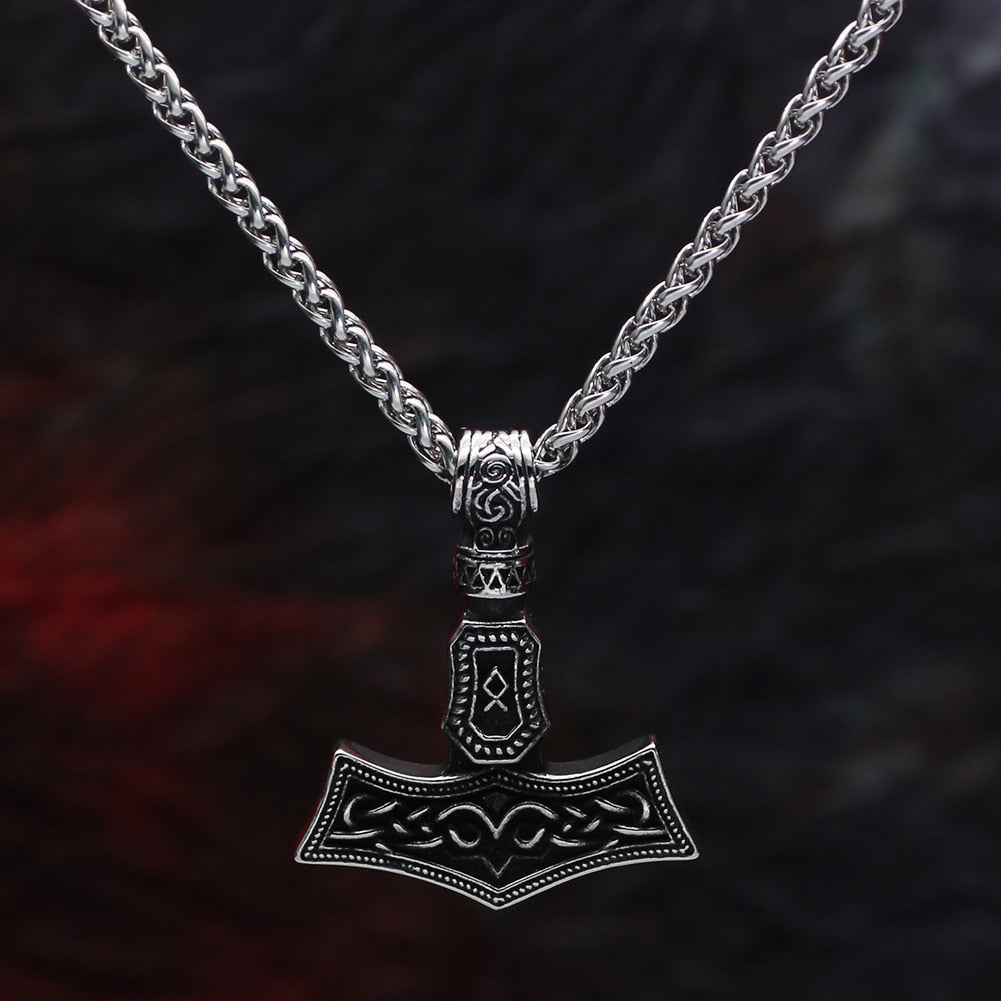
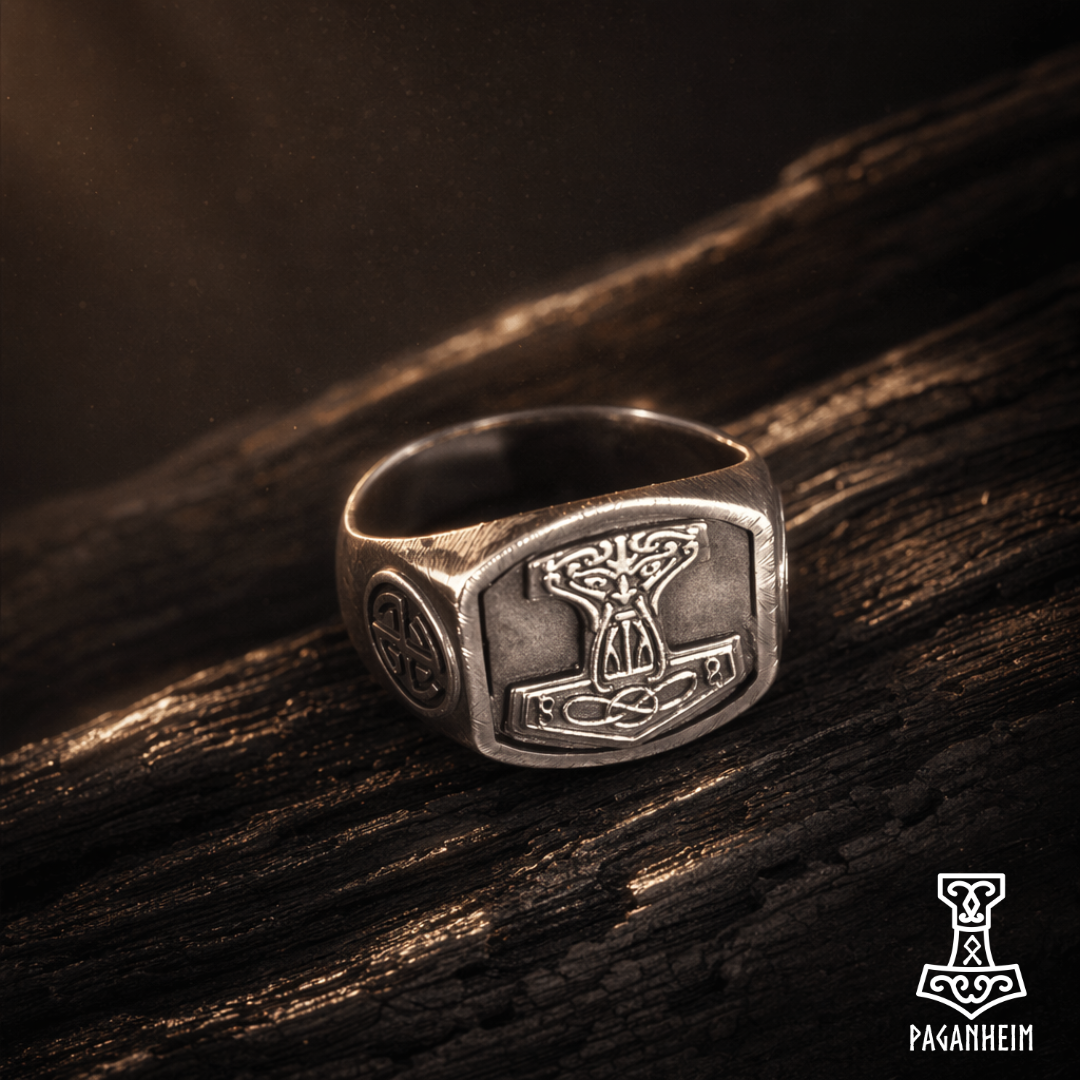
Valknut Othala Mjölnir - Teiwaz & Algiz Rune Thor's Hammer Amulet
Under Hunnic Domination
The Huns subjugated the Ostrogoths following Ermanaric's death, incorporating them into Attila's empire by the early 5th century CE. Amal descendants, including Hunimund and Thorismud, served as vassals. Jordanes recounts Thorismud's death in battle against the Gepids, leading to Beremud's exile among the Visigoths due to Hunnic favoritism toward another line.
Many Ostrogoths fought alongside the Huns, notably at the Battle of the Catalaunian Plains in 451 CE. After Attila's death in 453 CE, the empire disintegrated. The Gepids under Ardaric led a coalition to victory at the Battle of Nedao in 454 CE, allowing the Ostrogoths to regain independence. The Amals reasserted leadership, settling in Pannonia as foederati under Byzantine Emperor Marcian.
Consolidation in Pannonia
In the mid-5th century, the Amal brothers Valamir, Thiudimer, and Vidimer guided the Ostrogoths through turbulent times. Valamir, the eldest, acted as paramount leader, defeating rivals at the Battle of Bolia in 469 CE against a coalition including Gepids and Suebi. The brothers received annual subsidies from Constantinople, strengthening their position.
Thiudimer, father of Theodoric, conducted raids into the Balkans when payments faltered. Vidimer eventually migrated westward with part of the tribe, seeking lands in Gaul or Italy, though his fate remains uncertain. This period solidified Amal authority, transforming the Ostrogoths from Hunnic subjects into a cohesive force capable of challenging Roman interests.
Theodoric the Great
Theodoric, born around 454 CE near the Plattensee in Pannonia, spent his youth as a hostage in Constantinople from 461 to 471 CE, gaining insight into Roman governance. He succeeded Thiudimer in 475 CE, navigating alliances and conflicts with Byzantine emperors. In 488 CE, Emperor Zeno commissioned Theodoric to invade Italy and depose Odoacer, who had overthrown the last Western Roman emperor in 476 CE.

Theodoric defeated Odoacer at the Battles of the Isonzo and Verona in 489 CE, capturing Ravenna in 493 CE after a siege. He personally slew Odoacer at a banquet on March 15, 493 CE, establishing the Ostrogothic Kingdom. Ruling until 526 CE, Theodoric preserved Roman institutions, promoting civilitas through separate legal systems for Goths and Romans. He restored infrastructure in Ravenna, including his mausoleum, and forged alliances via marriages, such as his daughter to the Visigothic king and his sister to the Vandal ruler.
Successors and Decline
Theodoric's death in 526 CE initiated instability. His grandson Athalaric, aged ten, ascended under the regency of Amalasuntha, Theodoric's daughter educated in Roman ways. Amalasuntha sought Byzantine support, but Athalaric died in 534 CE from illness. She married her cousin Theodahad, who imprisoned and murdered her in 535 CE on Lake Bolsena.
Emperor Justinian I seized this as pretext for invasion, sparking the Gothic War in 535 CE. Witiges, elected king after deposing Theodahad, failed to halt Byzantine general Belisarius, who captured Ravenna in 540 CE. Totila revived Gothic resistance from 541 CE, but Narses defeated him at Taginae in 552 CE and his successor Teia at Mons Lactarius in 553 CE. Matasuntha, Amalasuntha's daughter, married Justinian's nephew Germanus, blending Amal blood into the Byzantine elite, though their son Germanus Postumus held no Gothic throne.

Theodoric speaks to his daughter Amalasuntha and his grandson Athalaric from his deathbed (Photo: Hermann Knackfuß).
Cultural and Political Legacy
The Amals cultivated a heroic image through genealogy, emphasizing divine descent and unbroken rule to legitimize authority. Intermarriages connected them to other Germanic dynasties, such as the Balti of the Visigoths, facilitating temporary unions like the Ostrogothic regency over Visigothic Spain after 507 CE.
Culturally, the dynasty patronized intellectuals like Cassiodorus and Boethius, fostering a Roman-Gothic synthesis. Ravenna's Arian churches and mosaics reflect this blend, though religious differences with Catholic Romans contributed to tensions.
Historiographical Debates
Scholars debate the genealogy's authenticity. Peter Heather argues that while early links may be constructed, the Amals' post-Hunnic rise reflects genuine oral traditions. Herwig Wolfram suggests Cassiodorus embellished the lineage to rival Roman antiquity, forging connections to Ermanaric. Arne Søby Christensen views much of Jordanes' account as literary invention, though aligned with 6th-century political needs. Limited contemporary evidence beyond Jordanes complicates verification, with Ammianus and Procopius offering partial corroboration.
The Amal dynasty transformed the Ostrogoths from peripheral nomads to rulers of a sophisticated kingdom, bridging the Roman Empire's fall and the early Middle Ages. From legendary forebears through Ermanaric's empire, Hunnic subjugation, and Theodoric's Italian realm, the Amals navigated migration, warfare, and diplomacy. Their decline amid the Gothic War marked the end of independent Gothic power in Italy, yet their legacy endures in the cultural fusion that influenced medieval Europe, exemplifying the era's ethnic and political fluidity.

Serpent Prowl - Old Norse Dragon Bangle Arm Ring
Frequently Asked Questions (FAQs)
Who founded the Amal dynasty?
According to Jordanes' Getica, the dynasty derives its name from Amal, a legendary ancestor in the genealogy tracing back to Gapt.
What was Theodoric the Great's relation to the Amals?
Theodoric was a direct descendant through Thiudimer, consolidating Amal rule and establishing the Ostrogothic Kingdom in Italy from 493 to 526 CE.
How did the Amals gain independence from the Huns?
Following Attila's death in 453 CE, the Ostrogoths benefited from the Battle of Nedao in 454 CE, settling independently in Pannonia as Byzantine foederati.
Why did the Amal dynasty end?
Dynastic crises after Theodoric's death in 526 CE, including murders and succession disputes, led to Justinian's Gothic War (535–554 CE) and Byzantine conquest.
Is the Amal genealogy historical?
Early parts are legendary, possibly embellished by Cassiodorus; from Ermanaric onward, it aligns with other sources, though links remain debated.
References
Jordanes. The Origin and Deeds of the Goths (Getica), c. 551 CE. Translated by Charles C. Mierow. Project Gutenberg, 2006. https://www.gutenberg.org/files/148/148-h/148-h.htm
Procopius. History of the Wars, Books V–VIII. Translated by H.B. Dewing. Loeb Classical Library, Harvard University Press, 1919–1928.
Cassiodorus. Variae. Translated by S.J.B. Barnish. Liverpool University Press, 1992.
Heather, Peter. The Goths. Blackwell, 1996.
Wolfram, Herwig. History of the Goths. University of California Press, 1988.
Burns, Thomas S. A History of the Ostrogoths. Indiana University Press, 1984.
Ammianus Marcellinus. Res Gestae. Translated by J.C. Rolfe. Loeb Classical Library, Harvard University Press, 1935–1939.







Leave a comment
This site is protected by hCaptcha and the hCaptcha Privacy Policy and Terms of Service apply.