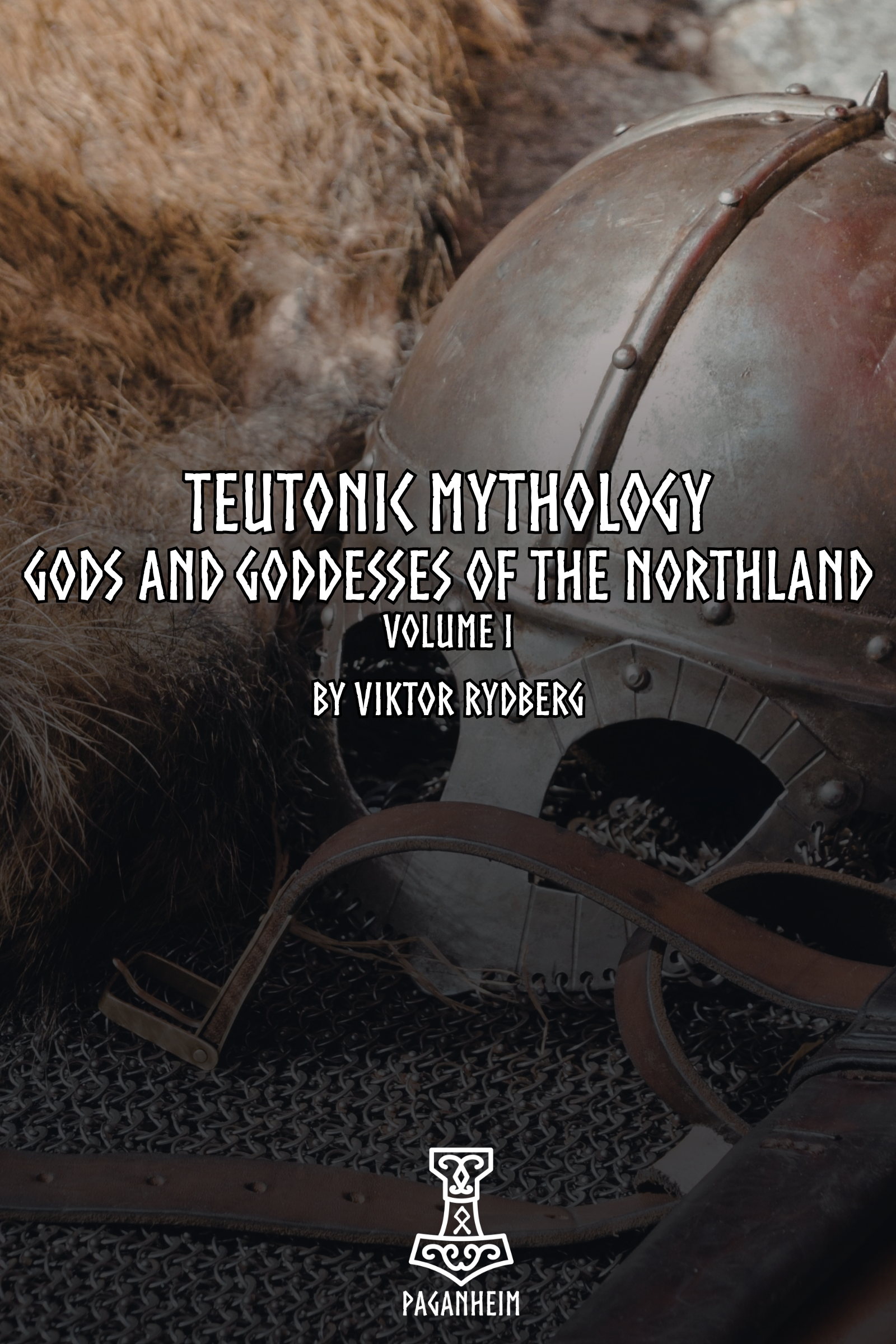
Description
Translated by Rasmus B. Anderson — Public Domain
Viktor Rydberg’s Teutonic Mythology is one of the most ambitious and controversial works ever written on Germanic paganism. First published in 1886, this volume attempts to reconstruct a unified mythic system behind the Norse and wider Germanic traditions, tracing their origins back to ancient Proto‑Indo‑European belief.
Rydberg challenges the academic assumptions of his time, arguing that Norse mythology preserves fragments of a far older religious structure. He proposes bold connections between myths, characters, and cosmological motifs — including his influential (and debated) interpretation of the World Mill, a cosmic mechanism underlying creation and destruction.
This volume explores:
- the Proto‑Indo‑European roots of Germanic myth
- the relationships between gods, giants, and mythic beings
- early cosmology and the structure of the worlds
- linguistic and narrative evidence linking scattered myths
- Rydberg’s chronological reconstruction of mythic events
Some scholars praise Rydberg’s insight and creativity; others criticize his speculative leaps. But his work remains a major milestone in the study of Norse and Germanic mythology — essential reading for anyone interested in reconstructionist thought, comparative myth, or the deeper origins of the Eddic tradition.
You can also read this book online through the text version hosted at Project Gutenberg.
EPUB — How to Use
- Download the EPUB file
- Open it in Apple Books, Google Play Books, Kobo, or any EPUB reader
- For Kindle users:
- Go to amazon.com/sendtokindle (or your country’s version)
- Upload the EPUB
- Wait for it to appear on your Kindle
Online Reading Option — How to Use
Most of the free ebooks offered here come from Project Gutenberg, and almost all of them include a free online reading version.
If you prefer not to download anything, you can simply open the book in your browser.
- Scroll to the bottom of the product description
- Click the link to the online text version
- The book will open instantly in your browser — no apps, no downloads, no setup
This is the easiest way to read if you’re on mobile, at work, or just want to preview the book before downloading the EPUB file.
Why This Book Is on Paganheim
Paganheim preserves and shares historical and mythological texts that shaped the cultures of the Norse, Germanic, and related peoples. These works are offered freely to support learning, research, and cultural continuity.
Choose options

Free Shipping & returns
45 Day Satisfaction guarantee
Top-notch support
Secure payments