
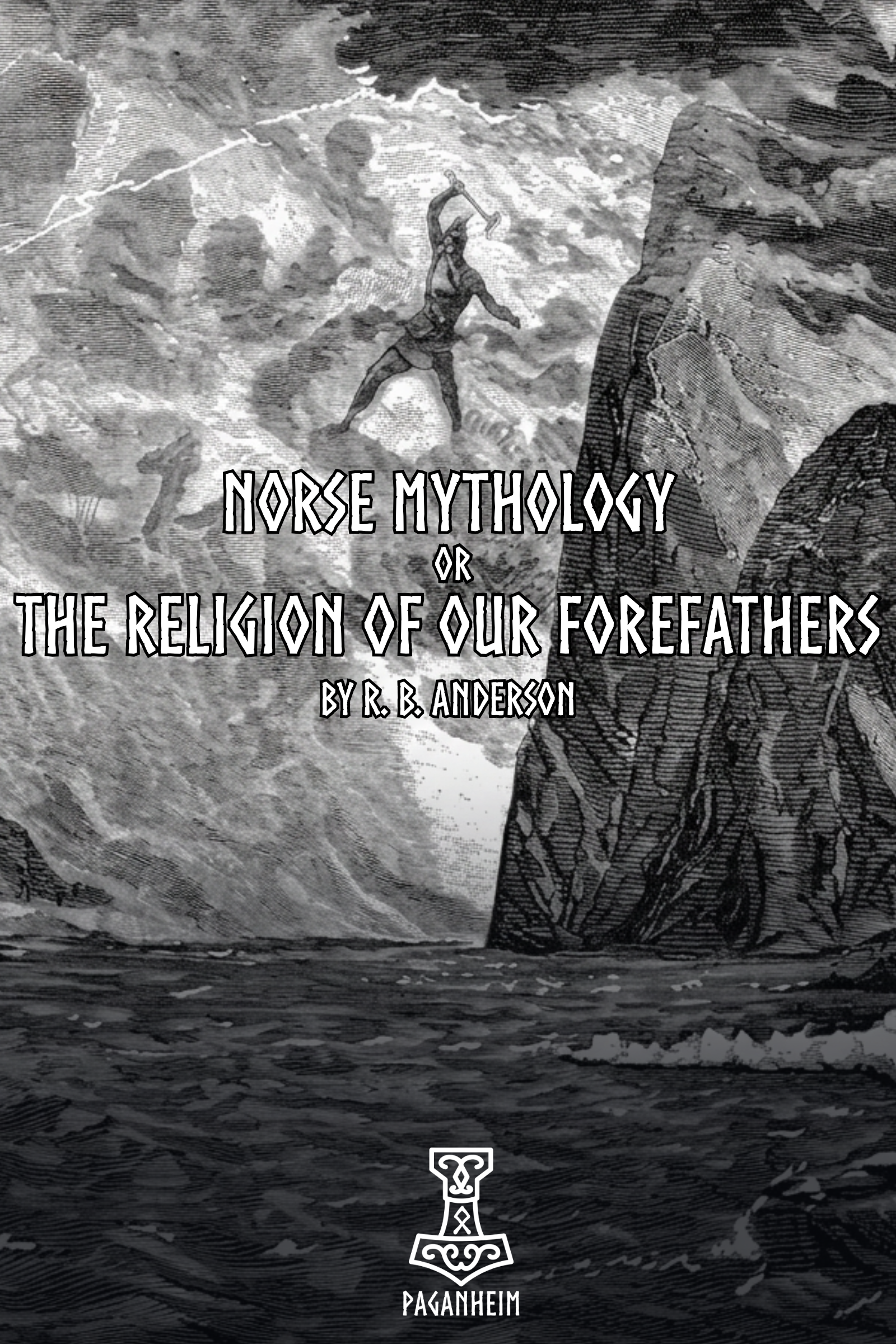
Description
Published 1870s — Public Domain
Rasmus B. Anderson’s Norse Mythology is one of the earliest comprehensive English‑language works to systematize and interpret the myths of the Eddas. Written in the late 19th century, it presents the gods, cosmology, and heroic traditions of the Norse world in a structured, accessible way for modern readers.
Anderson explores:
- the major gods — Odin, Thor, Freyja, Loki, Baldr
- the creation of the cosmos and the Nine Worlds
- the giants, elves, dwarves, and other mythic beings
- the moral and cultural worldview of pre‑Christian Scandinavia
- the survival of Norse myth in later folklore and literature
His goal was to revive interest in the ancestral beliefs of the Germanic peoples and to show their value alongside the more widely known Greek and Roman traditions. The result is a passionate, readable, and historically significant introduction to the mythic heritage of the North.
You can also read this book online through the text version hosted at Project Gutenberg.
EPUB — How to Use
- Download the EPUB file
- Open it in Apple Books, Google Play Books, Kobo, or any EPUB reader
- For Kindle users:
- Go to amazon.com/sendtokindle (or your country’s version)
- Upload the EPUB
- Wait for it to appear on your Kindle
Online Reading Option — How to Use
Most of the free ebooks offered here come from Project Gutenberg, and almost all of them include a free online reading version.
If you prefer not to download anything, you can simply open the book in your browser.
- Scroll to the bottom of the product description
- Click the link to the online text version
- The book will open instantly in your browser — no apps, no downloads, no setup
This is the easiest way to read if you’re on mobile, at work, or just want to preview the book before downloading the EPUB file.
Why This Book Is on Paganheim
Paganheim preserves and shares historical and mythological texts that shaped the cultures of the Norse, Germanic, and related peoples. These works are offered freely to support learning, research, and cultural continuity.
Choose options

Free Shipping & returns

45 Day Satisfaction guarantee
Top-notch support
Secure payments