Theodoric the Great and the Gothic Kingdom of Italy
Theodoric the Great was born around 454 CE into the Amal dynasty, the ruling house of the Ostrogoths. His life unfolded during the turbulent aftermath of the collapse of Hunnic power in Europe, when Germanic peoples competed for territory, legitimacy, and survival amid the weakening authority of the Western Roman Empire.

The Ostrogoths themselves had previously lived under the domination of the Hunnic Empire during the reign of Attila. After Attila’s death in 453 CE and the fragmentation of Hunnic authority, the Ostrogoths emerged once more as an independent political force in the Danubian region.
Theodoric inherited both Gothic royal lineage and a world profoundly shaped by Roman political structures. His career would ultimately become one of the clearest examples of how Roman and Germanic traditions merged during the Migration Period.
Hostage in Constantinople
As a child, Theodoric was sent to Constantinople as a political hostage to the Eastern Roman Empire, likely sometime in the 460s CE. Such arrangements were common diplomatic practices intended to secure treaties and alliances.
While in Constantinople, Theodoric was exposed to Roman administration, military organisation, imperial ceremony, and classical political culture. Although later sources may exaggerate the depth of his formal education, there is little doubt that his years in the imperial capital shaped his understanding of governance and kingship.
This experience later distinguished him from many contemporary Germanic rulers. He understood both the Roman political world and the traditions of Gothic warrior society, allowing him to operate effectively within both systems.
The Ostrogoths After the Huns
Following the collapse of Hunnic dominance, the Ostrogoths settled in the Balkans under varying agreements with the Eastern Roman Empire. Relations between Goths and Constantinople remained unstable throughout Theodoric’s early life.
At times the Ostrogoths served as imperial allies; at other times they became dangerous military rivals. The Eastern emperors frequently attempted to manipulate competing Gothic leaders against one another, creating a volatile political environment.
By the late 5th century, Theodoric had emerged as the dominant Ostrogothic king.
The Rise of Theodoric
The defining turning point in Theodoric’s career came through his conflict with Odoacer, the Germanic ruler who had deposed the last Western Roman emperor in 476 CE and established himself as ruler of Italy.
Although Odoacer technically recognised the authority of the Eastern Roman emperor, his growing independence alarmed Constantinople.

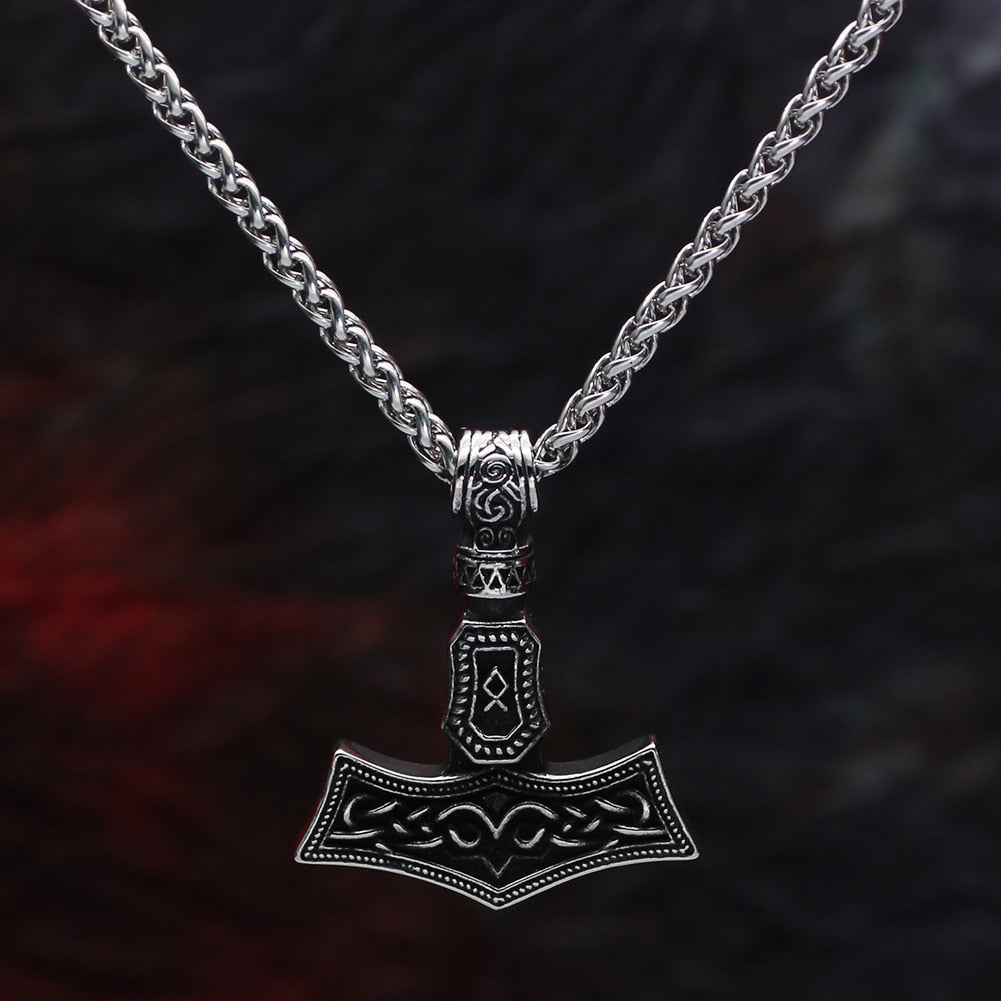
Tiwaz Rune Mjölnir Thor's Hammer Amulet
Conflict With Odoacer
In 488 CE, the Eastern emperor Zeno authorised Theodoric to invade Italy and remove Odoacer. This arrangement suited both parties. Zeno redirected a potentially troublesome Gothic force away from the Balkans, while Theodoric gained the opportunity to establish his own kingdom.
The Gothic migration into Italy was not merely a military expedition but the movement of an entire people, including warriors, families, and dependents.
The campaign lasted several years and involved brutal warfare across northern Italy. Odoacer proved a resilient opponent, retreating eventually to the heavily fortified city of Ravenna.
The Capture of Ravenna
In 493 CE, after a prolonged siege, Theodoric entered Ravenna under a negotiated settlement intended to establish joint rule between himself and Odoacer.
The arrangement collapsed almost immediately. During a banquet, Theodoric personally killed Odoacer, reportedly striking him down with a sword blow. Later chroniclers attributed to Theodoric the declaration that Odoacer had “no bones in his body,” emphasising the force of the attack.
With Odoacer dead, Theodoric became ruler of Italy and established the Ostrogothic Kingdom.
The Ostrogothic Kingdom in Italy
Theodoric’s reign over Italy became one of the most remarkable political experiments of the post-Roman world.
Unlike rulers who attempted to dismantle Roman institutions entirely, Theodoric consciously preserved much of the Roman administrative system while maintaining Gothic military and cultural identity.

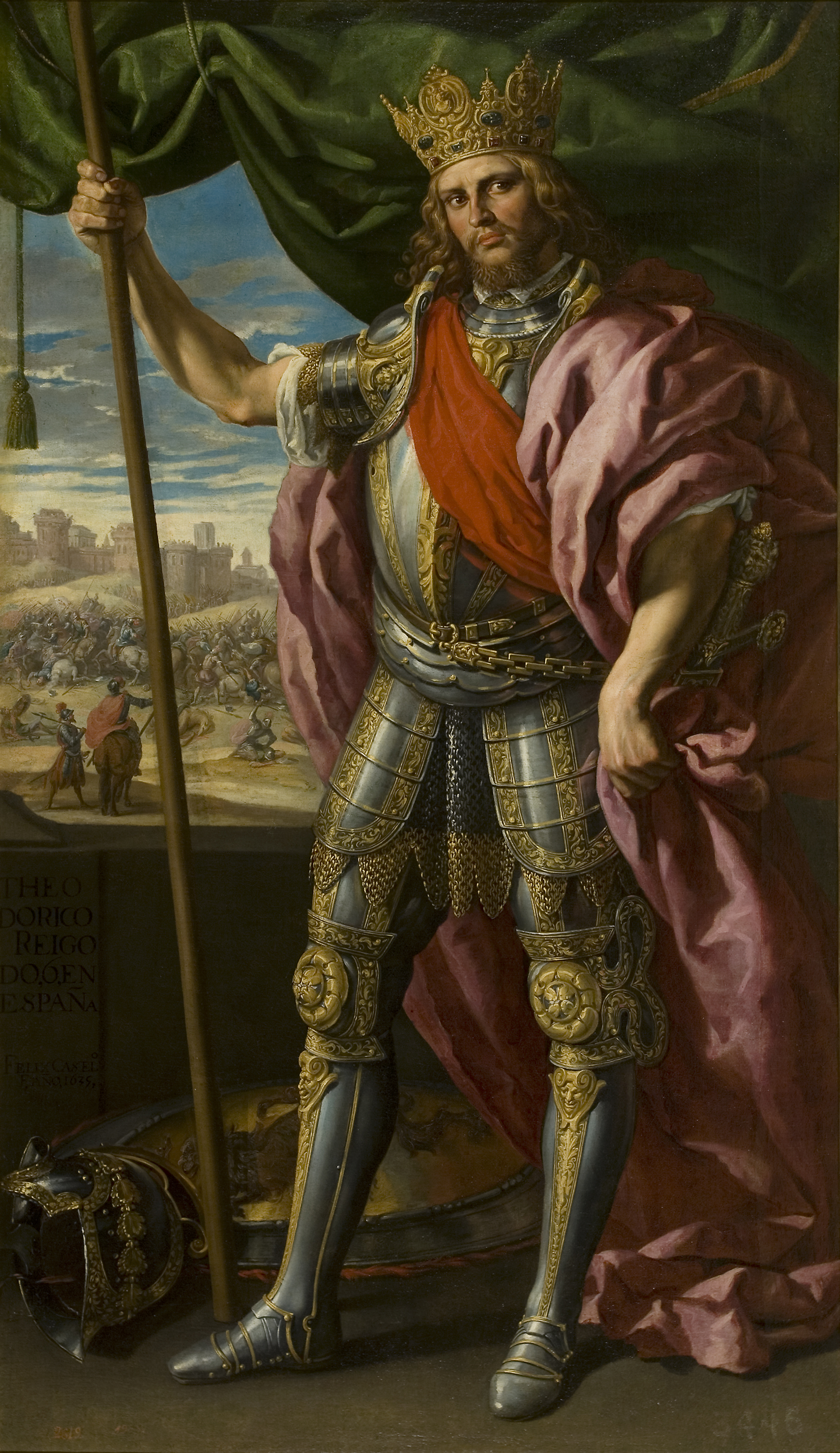
Statue of Theodoric I in the Royal Palace of Madrid, Spain (Photo: Basilio CC BY 3.0)
Romans and Goths Under Theodoric
Theodoric governed Italy through a dual structure. Romans continued to dominate civil administration, taxation, law, and bureaucratic offices, while the Goths primarily formed the military aristocracy.
This arrangement reflected practical necessity. The Roman administrative system remained highly sophisticated, and Theodoric relied heavily upon Roman elites to maintain stability.
Figures such as Cassiodorus served within his government and helped articulate the ideological vision of the Ostrogothic kingdom.
Theodoric sought coexistence rather than forced assimilation. Goths and Romans retained distinct legal traditions, cultural identities, and religious affiliations while operating within the same kingdom.
Roman Tradition and Gothic Identity
One of the most striking aspects of Theodoric’s rule was his effort to preserve both Roman and Gothic traditions simultaneously.
Roman urban infrastructure, senatorial institutions, and legal administration were maintained and in some cases restored. Theodoric sponsored repairs to aqueducts, roads, walls, and public buildings across Italy.
At the same time, he preserved Gothic martial identity and kingship traditions. The Ostrogoths remained a warrior elite conscious of their distinct ancestry and social role.
Modern historians increasingly view Theodoric’s kingdom not as the destruction of Rome, but as part of the transformation of the Roman world into medieval Europe.
Diplomacy and the Germanic World
Theodoric’s influence extended far beyond Italy itself.
Through marriage alliances and diplomacy, he sought to stabilise relations among the major Germanic kingdoms of western Europe.
Marriage Alliances and Political Strategy
Theodoric arranged dynastic marriages connecting the Ostrogoths to the Visigoths, Franks, Vandals, and Burgundians.
These alliances formed part of a broader strategy aimed at preventing any single power from dominating the post-Roman west.
For a time, Theodoric became one of the most influential political figures in western Europe, acting as both Germanic king and inheritor of Roman imperial traditions.
The Balance of Power in Western Europe
Despite his diplomatic efforts, new powers continued to rise. The Franks under Clovis I increasingly threatened Gothic influence in Gaul.
The Frankish victory over the Visigoths at the Battle of Vouillé in 507 CE significantly altered the political balance of western Europe and demonstrated the growing power of the Frankish kingdom.
Religion and Political Tensions
Religion became one of the major fault lines of Theodoric’s later reign.
The Ostrogoths were predominantly adherents of Arian Christianity, while the majority of the Roman population in Italy followed Nicene Christianity.
For much of his rule, Theodoric governed with relative religious tolerance. However, tensions intensified as relations between the Ostrogothic kingdom and the Eastern Roman Empire deteriorated.
Boethius and the Crisis of the Late Reign
The most famous political victim of this period was Boethius, the Roman philosopher and statesman.
Accused of conspiracy with Constantinople, Boethius was imprisoned and eventually executed around 524 CE. During imprisonment he wrote The Consolation of Philosophy, one of the most influential works of medieval literature.
The execution damaged Theodoric’s reputation among later Roman and Christian writers.
The Death of Theodoric and the Fall of the Kingdom
Theodoric died in 526 CE after more than three decades of rule.
His death exposed the fragility of the Ostrogothic political system, which relied heavily upon his personal authority and diplomatic skill.
Justinian and the Gothic Wars
Only a few years later, the Eastern Roman emperor Justinian I launched the Gothic Wars in an attempt to reconquer Italy.
The resulting conflict devastated the peninsula. Cities were ruined, populations declined, and the Ostrogothic Kingdom was ultimately destroyed after decades of warfare.
The reconquest, although initially successful, permanently weakened Italy and contributed to later Lombard invasions.
The Legacy of Ostrogothic Italy
Despite its relatively short lifespan, the Ostrogothic Kingdom represented one of the most important transitional states between Antiquity and the medieval world.
Theodoric demonstrated that Germanic rulers could preserve Roman administration while maintaining their own cultural traditions. His reign embodied the broader blending of Roman and Germanic civilisation that shaped medieval Europe.
Rather than simply replacing Rome, rulers like Theodoric adapted Roman political culture into new forms suited to the realities of the post-imperial west.
Conclusion
Theodoric the Great emerged from the chaos of the Migration Period to establish one of the most stable and sophisticated kingdoms of the post-Roman world. Raised partly within the orbit of Constantinople yet rooted in Gothic warrior culture, he became a ruler capable of navigating both Roman and Germanic traditions.
His kingdom in Italy preserved Roman administration, urban infrastructure, and senatorial institutions while maintaining Gothic political identity and military structure. In doing so, Theodoric created a hybrid political order that reflected the broader transformation of Europe after the collapse of the Western Roman Empire.
Although the Ostrogothic Kingdom did not survive long after his death, Theodoric’s reign demonstrated that the relationship between Rome and the Germanic peoples was not solely one of destruction and conquest. It was also one of adaptation, coexistence, and cultural synthesis that helped shape the foundations of medieval Europe.

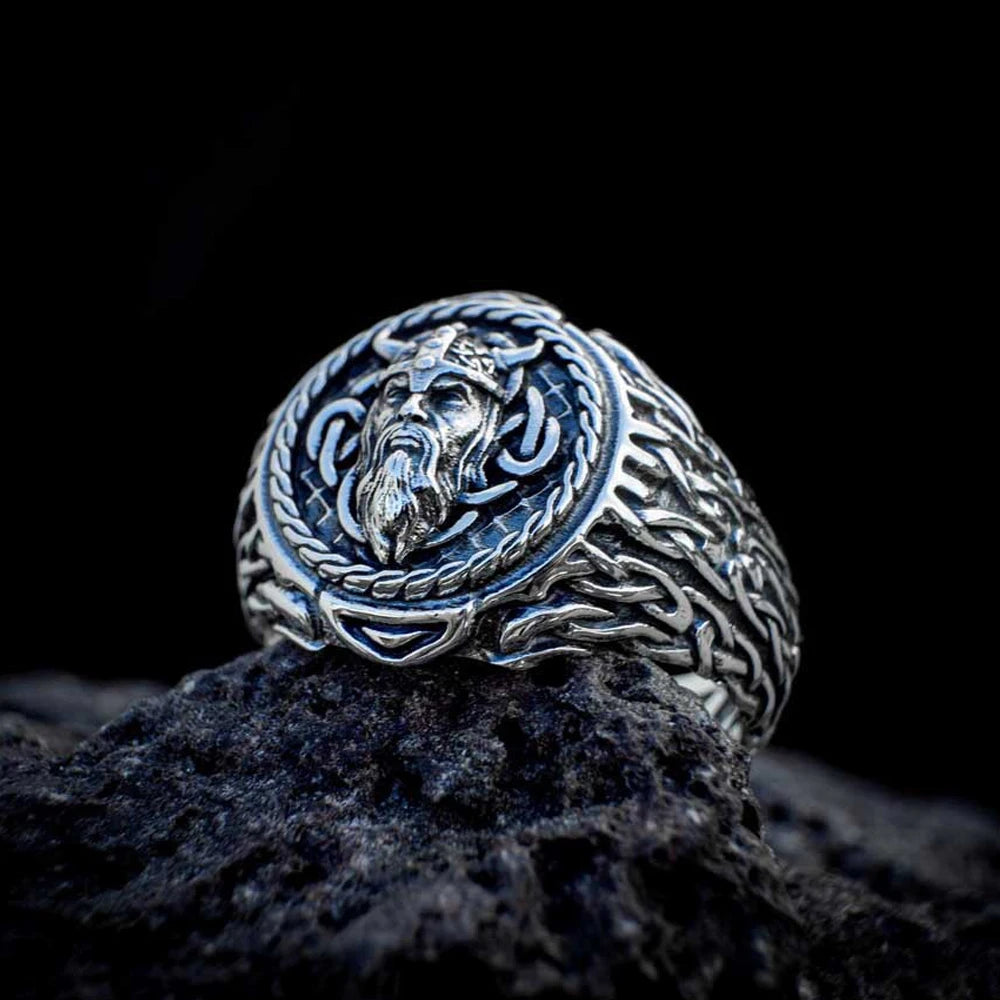
Norse Icelandic Ouroboros Vegvísir Ring
Frequently Asked Questions (FAQs)
Who was Theodoric the Great?
Theodoric was the Ostrogothic king who ruled Italy from 493 to 526 CE.
Was Theodoric Roman or Gothic?
He was ethnically Ostrogothic but heavily influenced by Roman political culture.
Why was Theodoric sent to Constantinople?
He was sent as a political hostage to secure diplomatic agreements between the Ostrogoths and the Eastern Roman Empire.
Did Theodoric preserve Roman institutions?
Yes. He maintained Roman administration, infrastructure, and many aspects of Roman governance.
What happened after Theodoric’s death?
The Ostrogothic Kingdom weakened and was eventually destroyed during the Gothic Wars launched by Emperor Justinian.
References
Jordanes, Getica
Cassiodorus, Variae
Procopius, Wars of Justinian
Boethius, The Consolation of Philosophy
Peter Heather, The Goths
Patrick Amory, People and Identity in Ostrogothic Italy
Guy Halsall, Barbarian Migrations and the Roman West




Leave a comment
This site is protected by hCaptcha and the hCaptcha Privacy Policy and Terms of Service apply.