Article: The Frisians: The Sea Peoples of the North Sea World
The Frisians: The Sea Peoples of the North Sea World
The Frisians were one of the most enduring and distinctive peoples of the North Sea coastal world. Occupying the low-lying coastal regions between what is now the Netherlands and northwestern Germany, they developed a maritime culture shaped by tides, trade routes, and constant interaction with neighbouring Germanic groups.
Unlike more centralised polities of the Roman world, the Frisians existed as a loosely organised network of coastal communities. Their identity was shaped less by fixed borders and more by shared language, seafaring tradition, and regional continuity across the marshlands and islands of the North Sea coast.
The Frisian Coastal World
The Frisian homeland was defined by its geography. Marshes, tidal flats, and shifting coastlines required a specialised way of life centred on seafaring, animal husbandry, and trade. Settlements were often built on artificial mounds known as terpen, which protected communities from flooding.
This environment fostered independence and adaptability. Rather than forming a unified kingdom in the early period, Frisian society appears to have consisted of interconnected local groups who shared cultural traits but retained significant autonomy.
Frisians in Roman Sources and Frontier Conflict
The earliest written references to the Frisians appear in Roman sources, including accounts of frontier activity along the lower Rhine. Roman writers describe them as one of several coastal Germanic peoples engaged in both trade and raiding.
Relations with the Roman Empire were unstable. At times, Frisians served as trading partners, supplying goods such as cattle, hides, and textiles. At other times, they were involved in maritime raids against Roman coastal installations.
Roman military campaigns in the region occasionally forced temporary subjugation or relocation of Frisian groups, though control over the coastal marshlands remained difficult for imperial authorities to sustain for long periods.
The Frisians in the Migration Period
During the Migration Period, the Frisian world became even more deeply interconnected with neighbouring Saxon and Angle populations. Rather than existing in isolation, these groups formed part of a shared North Sea cultural and linguistic continuum.
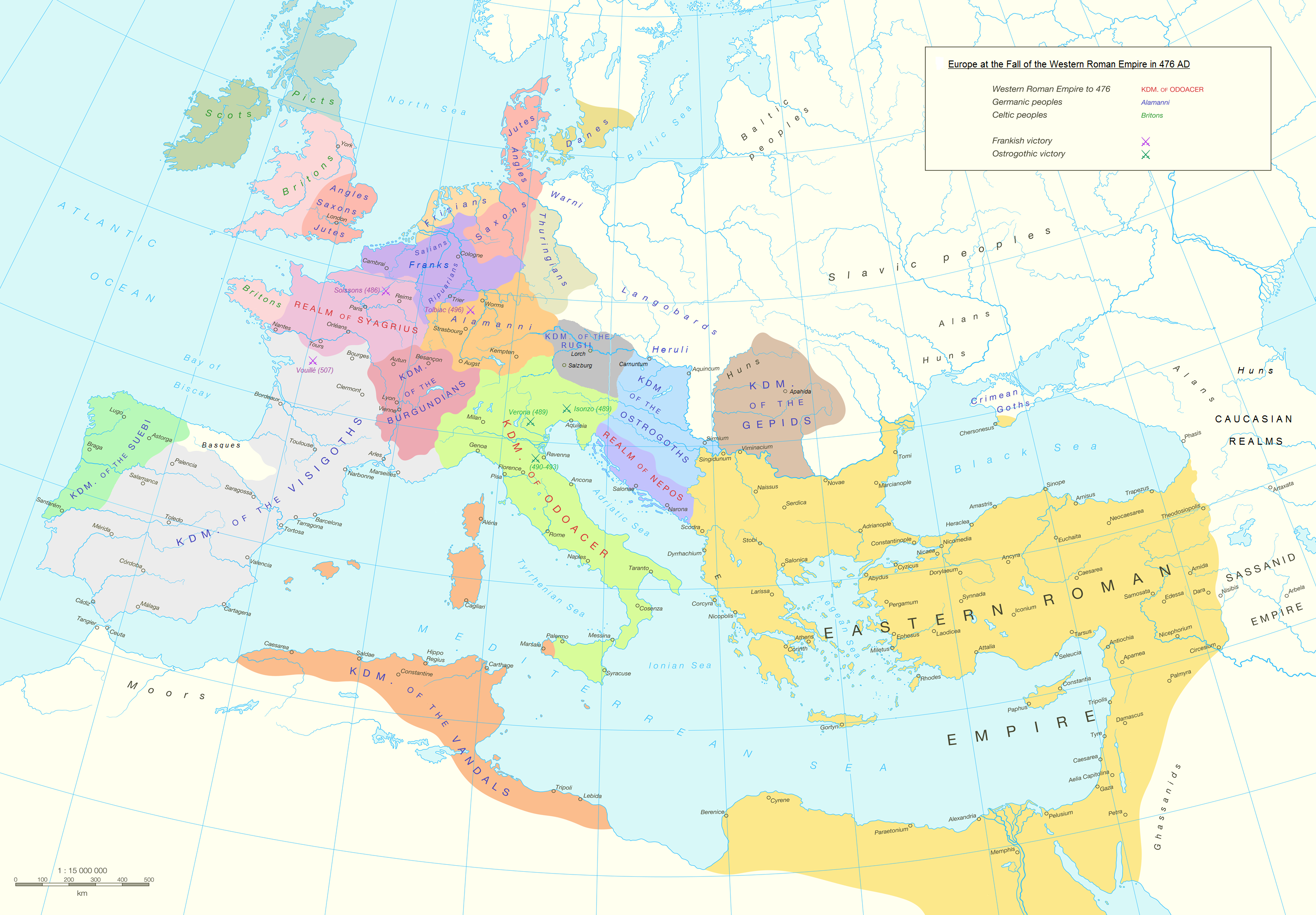
Germanic tribes in the 5th century (Photo: Guriezous CC BY-SA 4.0).
Frisians, Saxons, and the North Sea Network
The Frisians were closely connected to the Saxons and the Angles through maritime trade, shared dialectal similarities, and overlapping settlement zones. These groups often operated within the same coastal and riverine networks, moving goods, people, and military forces across the North Sea region.
The boundaries between Frisian, Saxon, and Angle identity were not rigid. In many cases, identity was shaped locally and could shift depending on political allegiance, settlement, or migration.
Movement Into Britain and Continental Reorganisation
During the 5th and 6th centuries, Frisians appear alongside Angles and Saxons in the migration into post-Roman Britain. While the Angles and Saxons became the dominant cultural labels in later English tradition, Frisian participation in these movements is strongly suggested by linguistic and archaeological evidence.
At the same time, not all Frisian populations left the continent. Many remained in their coastal homelands, while others likely moved between regions depending on political pressure, trade opportunities, and changing power structures in the post-Roman world.
The Medieval Frisian World
By the early medieval period, the Frisian coastal region had developed a distinctive cultural and legal identity. Although often influenced by neighbouring powers such as the Carolingian Empire, Frisian communities maintained strong local traditions.

Skåne Mjölnir Thor's Hammer Bracelet
Frisian Law and Identity
Frisian law codes, preserved in later medieval manuscripts, reflect a society structured around communal responsibility and local legal assemblies. These traditions emphasised compensation, social obligation, and the resolution of disputes within the community rather than through centralised royal authority.
This legal culture contributed to the later concept often described as “Frisian freedom,” a tradition in which certain Frisian regions claimed exemption from feudal obligations under external rulers, although the historical reality of this freedom varied across time and territory.
Trade, Seafaring, and the “Frisian Freedom”
The Frisians became prominent maritime traders during the early medieval period. Their position along key North Sea routes connecting Britain, Scandinavia, and the Frankish world made them important intermediaries in long-distance trade.
Frisian merchants are frequently mentioned in early medieval sources as active participants in commerce across northern Europe. Their maritime expertise helped maintain economic connectivity in a post-Roman landscape increasingly defined by regional kingdoms.
Cultural Memory, Myth, and Controversy
Frisian history has also been shaped by a rich tradition of folklore, mythic history, and later cultural reinterpretation. Some of these traditions are well attested in regional storytelling, while others emerged much later and remain highly controversial among historians.
The Two White Stallions Tradition
The two white stallions that accompany the Frisian coat of arms are among the most recognizable symbols of the Frisian people. Although historians cannot identify exactly when the motif first emerged, the image resonates strongly with older Germanic traditions in which horses occupied a special place in both religion and society.
White horses appear repeatedly in accounts of Germanic peoples. Tacitus recorded that sacred white horses were kept and consulted for omens, while archaeological finds and later medieval sources demonstrate the importance of horses as symbols of status, fertility, and divine favour. Across the North Sea world—from Frisia and Saxony to Denmark and England—the horse was one of the most respected animals in Germanic culture.
The Oera Linda Book and 19th-Century National Romanticism
Few works associated with Frisian history have generated as much fascination and controversy as the Oera Linda Book. First brought to public attention in the nineteenth century, the manuscript claimed to preserve an ancient Frisian chronicle stretching back thousands of years into the distant past.

The text presents a sweeping account of prehistoric Frisian civilization, describing a society governed by folk assemblies and priestesses, marked by great floods, and shaped by long-distance migrations. It portrays the Frisians as descendants of an ancient and highly developed culture with influence extending far beyond the North Sea, and includes stories of legendary rulers, voyages, wars, and preserved ancestral traditions.
The work gained attention in the nineteenth century for presenting the Frisians as an exceptionally ancient people whose origins rivalled those of classical civilizations, appealing to growing European interest in national antiquity and identity.
Modern scholarship, however, overwhelmingly regards the Oera Linda Book as a nineteenth-century composition rather than an ancient manuscript, based on linguistic analysis, internal inconsistencies, and its documented emergence. It is therefore considered a literary creation rather than a historical source.
Despite this, it remains culturally significant, reflecting a period in which Frisian identity and language faced increasing external pressure. Whether satire, nationalist expression, or literary experiment, it highlights a strong desire to assert and preserve Frisian distinctiveness and continues to be widely discussed in cultural and historical debates.
Frijo and the Ancestral Origins of the Frisians
Like many Germanic peoples, the Frisians preserved traditions concerning an ancestral founder from whom their people derived both their name and their identity. In medieval Frisian chronicles and genealogical traditions, this figure appears under several forms, including Frijo, Friso, Fryso, and Frisus. He was remembered as the forefather of the Frisian people and the eponymous ancestor from whom Friesland itself ultimately took its name.
The tradition places Frijo within a wider Germanic pattern of tribal ancestry. The Danes traced their origins to Dan, the Angles to Ængle, the Saxons to Saxnot, and the Gautar to Gaut. Across the Germanic world, peoples commonly explained their origins through descent from a named ancestor whose descendants grew into a tribe, kingdom, or nation. These figures occupied an important place in cultural memory, linking later generations to a shared past and reinforcing a sense of common identity.
Whether Frijo was a historical individual can no longer be determined. No contemporary source records his life, and the surviving traditions were written centuries after the earliest Frisian communities emerged. Nevertheless, the widespread Germanic practice of tracing tribal origins to ancestral founders suggests that such traditions may preserve distant memories of real lineages, leaders, or founding groups whose stories gradually became legendary over time.
Regardless of his historical reality, Frijo remained an important symbol of Frisian identity throughout the Middle Ages. His story reflected the Frisians' understanding of themselves as a distinct people with their own ancestry, traditions, and homeland along the North Sea coast. Like Dan among the Danes or Ængle among the Angles, Frijo served as a reminder that the Frisians saw themselves not merely as inhabitants of a region, but as descendants of a people bound together by a common origin.

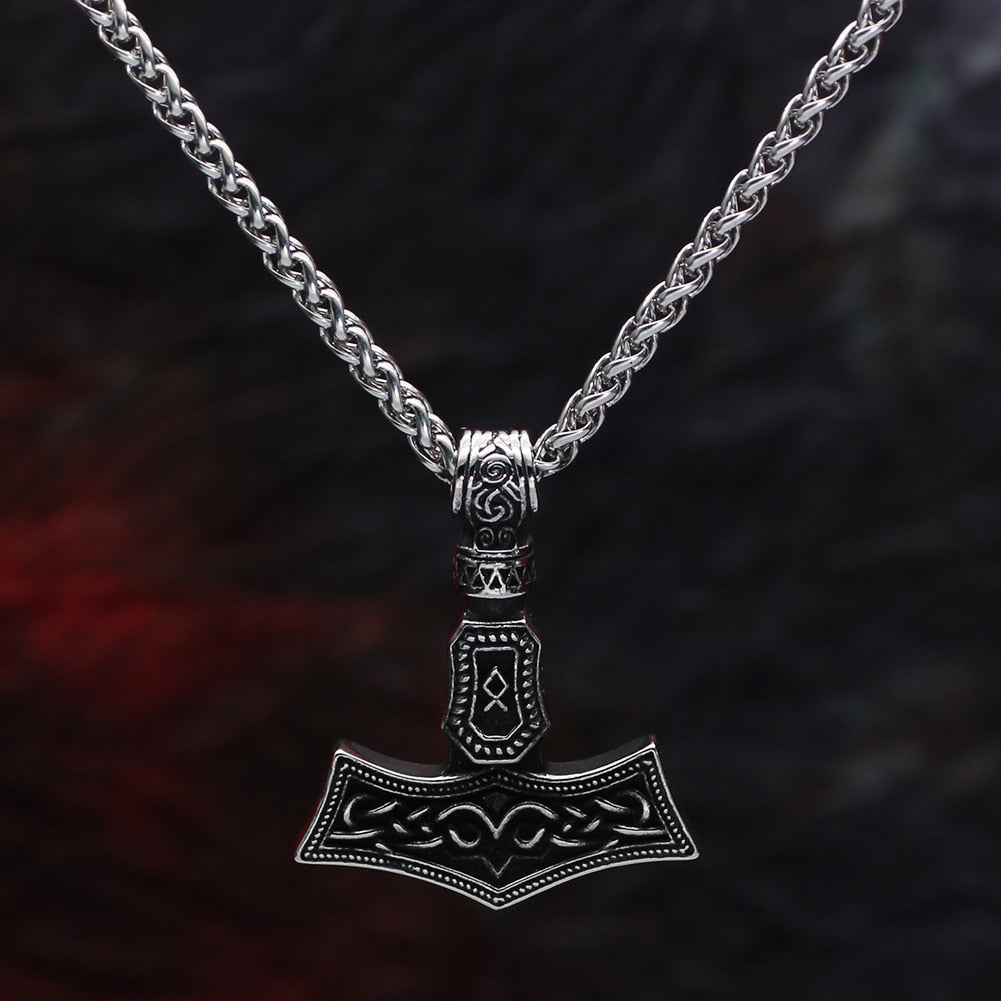
Odin Totem Pendant – Jelling Style Amulet
The Survival of Frisian Identity
Despite centuries of political change, Frisian identity has persisted into the modern era. The Frisian language remains spoken in parts of the Netherlands and Germany, and regional cultural traditions continue to reflect the long continuity of coastal life in the North Sea world.
While political autonomy has fluctuated over time, the cultural distinctiveness of the Frisians remains one of the most enduring examples of continuity from the early medieval period into the present.
Conclusion
The history of the Frisians is deeply rooted in the coastal world of the North Sea, where geography, seafaring, and cultural interaction shaped one of the most distinctive Germanic peoples of Late Antiquity and the early Middle Ages. From their early interactions with the Roman frontier to their close connections with Saxons and Angles, the Frisians were never an isolated group but part of a wider maritime network that linked northern Europe together.
Through trade, migration, and shared cultural traditions, Frisian communities played a significant role in the transformation of post-Roman Europe. While some traditions, such as the Oera Linda Book, belong to later periods of cultural reinterpretation rather than historical reality, they nonetheless reflect the enduring importance of Frisian identity across time.
Today, the Frisians stand as a rare example of cultural continuity in Europe, maintaining linguistic and regional traditions that stretch back into the early medieval world.
Frequently Asked Questions (FAQs)
Who were the Frisians?
The Frisians were a Germanic people from the coastal regions of the North Sea, primarily in modern-day Netherlands and northwestern Germany.
Did the Frisians migrate to Britain?
Yes, Frisians participated in the same migration networks as Angles and Saxons, though many also remained on the continent.
What is the Oera Linda Book?
It is a 19th-century manuscript later identified by most scholars as a forgery, though it had cultural influence in Frisian nationalism.
What was Frisian law?
Frisian law consisted of early medieval legal traditions based on compensation, communal responsibility, and local assemblies.
Are Frisians still around today?
Yes, modern Frisians live primarily in the Netherlands and Germany and continue to speak Frisian languages and maintain regional identity.
References
Tacitus, Germania
Bede, Historia Ecclesiastica Gentis Anglorum
Guy Halsall, Barbarian Migrations and the Roman West
Peter Heather, Empires and Barbarians
Patrick J. Geary, Before France and Germany





Leave a comment
This site is protected by hCaptcha and the hCaptcha Privacy Policy and Terms of Service apply.