
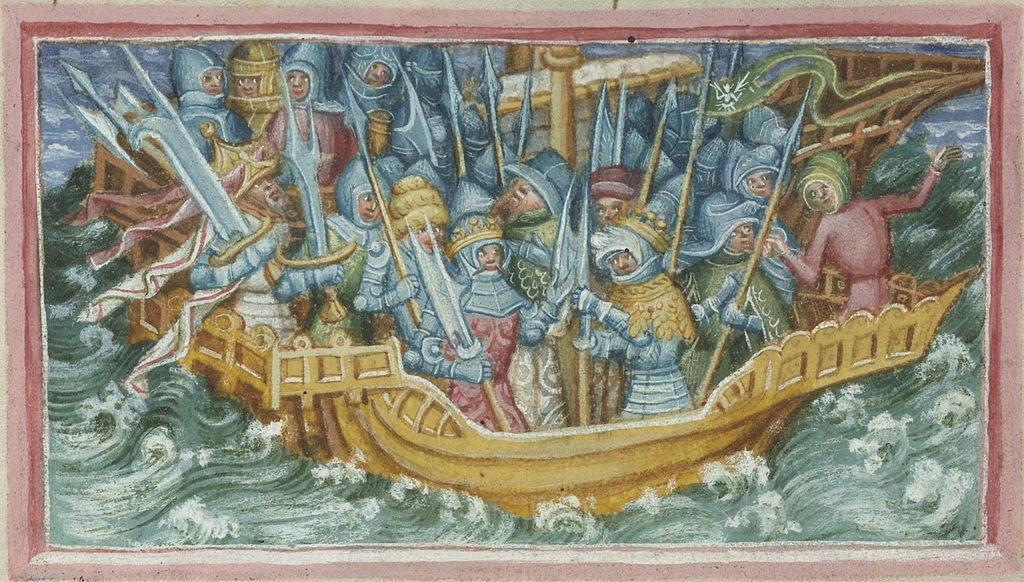
New Research Targets King's Mound for Ivar the Boneless' Lost Grave
Ivar the Boneless, recorded in Old Norse as Ívarr hinn Beinlausi, was a ninth-century Viking leader. Sources place him as one of the sons of Ragnar Lodbrok in the Tale of Ragnar's Sons (a thirteenth-century Icelandic saga) and other medieval texts. He led parts of the Great Heathen Army that invaded England in 865, capturing York in 866 and campaigning in Mercia and East Anglia. The army executed King Ælla of Northumbria, an event linked in sagas to the blood eagle ritual.
By 870–871, Ivar moved to Ireland, where annals record him as a king in Dublin. The Annals of Ulster note his death in 873 from a sudden illness. Sagas claim he requested burial in a vulnerable coastal location so his presence would deter invaders after death. The epithet "Boneless" remains debated: some scholars link it to a physical condition like brittle bones, others to symbolic or metaphorical meanings in Old Norse.
No confirmed grave has been identified. Previous focus fell on Repton in Derbyshire, site of a Viking winter camp in 873–874.
The Repton Site and Its Limitations
Excavations at Repton in the 1970s–1980s uncovered a mass grave with remains of over 250 individuals, mostly males of Scandinavian origin, dated to the Viking period. Artifacts included weapons and personal items. An earlier report from 1686 described a large central skeleton (around nine feet tall) surrounded by other bones in a mound, once linked to Ivar due to saga descriptions of his stature.
Radiocarbon dating and osteological studies place the main burials in the mid-ninth century, but no individual has been conclusively tied to Ivar. The "giant" skeleton account relies on unreliable post-medieval records, and modern analysis shows the site as a collective overwintering burial rather than a single elite grave. Scholars including Cat Jarman have noted the evidence does not support a specific royal identification.
The Cumbrian Proposal: King's Mound
In January 2026, archaeologist Steve Dickinson proposed that a large mound in west Cumbria, known in medieval texts as Coningeshou ("The King's Mound"), may contain Ivar's burial. Dickinson, affiliated with the European Association of Archaeologists, identified the site through cross-referencing Icelandic saga references to Coningeshou with landscape features.
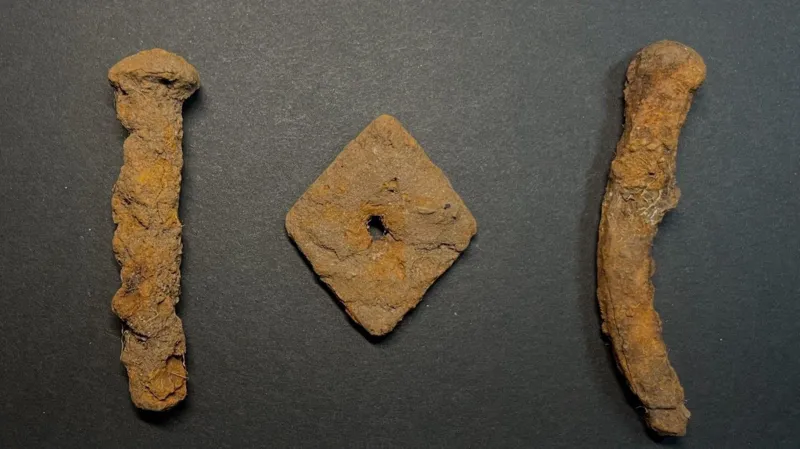
Photo by Steve Dickinson of some ship rivets discovered close by in the area.
The mound measures about 60 meters in diameter and 6 meters high, overlooking the Irish Sea. Its exact location is undisclosed to prevent disturbance. Dickinson visited in August 2024 and confirmed its dimensions and coastal position align with elite Viking burial preferences for visibility and access.
Surrounding the main mound are 39 smaller mounds, interpreted as a possible necropolis for retainers, family, or warriors. Dickinson suggests the central mound covers a ship burial—a rite for high-status individuals involving a clinker-built vessel interred with grave goods.
Supporting evidence includes metal-detector finds near the site: large iron ship rivets, roves, and lead weights for silver measurement. A silver hoard from the area indicates Viking trade activity. These artifacts fit patterns from known Norse settlements in northwest England, where place-name and sculptural evidence shows strong Scandinavian influence from the ninth–tenth centuries.
Viking Ship Burials in Context
Monumental ship burials are rare in northwest Europe, with only about 16 known examples from the pre-Viking and Viking periods. Most occur in Scandinavia (e.g., Gokstad, Oseberg in Norway). In Britain, Sutton Hoo (seventh century, pre-Viking) is the closest parallel, though not Norse. No confirmed Viking Age monumental ship burial has been excavated in the UK or Ireland.
If confirmed, the King's Mound would be the first such site in Britain and one of few outside Scandinavia. Dickinson argues the coastal location matches saga traditions of Ivar's burial request, and west Cumbria's Norse settlement (evidenced by hogback stones, place names, and recent LiDAR surveys showing halls and fleet bases) supports Ivar having a power base there before or after his Irish activities.
Debates and Next Steps
The proposal remains a hypothesis. No excavation has occurred, and non-invasive methods like electromagnetic ground scans are planned for later in 2026. Critics may note that saga references to Coningeshou are late (thirteenth century onward) and potentially anachronistic or symbolic. The Repton theory, though weakened, retains support from some due to the documented 873–874 camp coinciding with Ivar's death year.
Dickinson maintains the textual-topographical match, combined with artifact finds, makes the Cumbrian site more plausible than Repton for a personal elite burial. Confirmation would require geophysical survey, followed—if warranted—by targeted excavation under professional oversight.
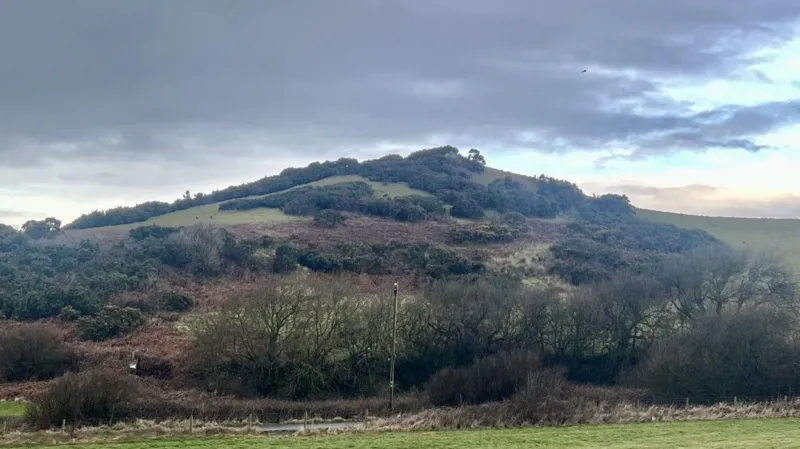
Shot of the hill taken by Steve Dickinson
A map showing Viking activity in ninth-century northwest England, with marked sites in Cumbria and Repton, would clarify regional patterns. Similarly, a diagram comparing mound dimensions at King's Mound, Gokstad, and Sutton Hoo could illustrate scale and form.
The King's Mound hypothesis centers on a 60-meter coastal earthwork in west Cumbria as the potential ship burial of Ivar the Boneless, supported by medieval place-name references, nearby Viking artifacts, and regional Norse settlement evidence. While the Repton site provided important data on Viking presence, it lacks a direct link to Ivar. The Cumbrian claim, if verified through survey and excavation, would add a major elite burial to British Viking archaeology and highlight west Cumbria's role in the Irish Sea network. At present, it represents a promising lead in a long-standing search, pending further investigation.
Frequently Asked Questions (FAQs)
What is the main evidence for the King's Mound as Ivar's grave?
Medieval references to Coningeshou ("The King's Mound") in Icelandic sagas, the mound's size and coastal position, surrounding smaller mounds suggesting a necropolis, and nearby finds of ship rivets and lead weights.
Why has Repton been considered before?
It was the site of a Viking winter camp in 873–874, matching Ivar's death year, with a mass grave and an old report of a large central skeleton. Modern studies show no conclusive individual identification.
Has the site been excavated?
No. The location is kept secret to protect it. Plans include non-invasive geophysical scans in 2026.
How many monumental ship burials are known?
About 16 in northwest Europe, mostly in Scandinavia. None confirmed in the UK from the Viking Age.
What would confirmation mean for Viking history in Britain?
It would establish the first known Viking monumental ship burial in the UK, reinforce Norse control in northwest England, and link saga traditions more directly to archaeological sites.
References
BBC News. "Cumbria Hill Could Hold Grave of Viking King Ivarr the Boneless." January 31, 2026. https://www.bbc.com/news/articles/c8rm8g43x40o.
The Independent. "Ivarr the Boneless: Lost Grave of Viking Warlord 'Discovered' on English Coast." February 2026. https://www.the-independent.com/news/science/archaeology/viking-grave-ivarr-the-boneless-b2915286.html.
Ancient Origins. "This Hill Could Hide Viking Grave of Ivarr the Boneless." February 1, 2026. https://www.ancient-origins.net/news-history-archaeology/ivar-boneless-burial-00102489.
Arkeonews. "England May Hold the Lost Grave of a Legendary Viking Warlord." February 2026. https://arkeonews.net/england-may-hold-the-lost-grave-of-a-legendary-viking-warlord.
Dickinson, Steve. "The King's Mound, West Cumbria, UK." Academia.edu, December 2025. https://www.academia.edu/145465476/The_Kings_Mound_West_Cumbria_UK_Dec.






Leave a comment
This site is protected by hCaptcha and the hCaptcha Privacy Policy and Terms of Service apply.