The Norse-Gaels: A Fascinating Fusion of Norse and Celtic Cultures
The people commonly referred to as the Norse-Gaels emerged from centuries of interaction between Scandinavian settlers and Gaelic-speaking populations across Ireland, western Scotland, the Hebrides, and the Isle of Man during the Viking Age. Their culture developed within the broader maritime world of the Irish Sea between the 9th and 13th centuries, blending elements of Old Norse and Gaelic society into a distinct political and cultural identity.
The term “Norse-Gael” is modern and not one used by medieval communities themselves. Contemporary Irish sources instead employed terms such as Gall-Goídil, meaning “foreign Gaels” or “Gaelic-speaking foreigners.” These descriptions reflected the growing integration between Norse settlers and Gaelic populations rather than the existence of a clearly separate ethnic group.
Scandinavian Expansion into the British Isles
The origins of the Norse-Gaels lie in the Viking expansion that began in the late 8th century. Scandinavian raids on monasteries such as Lindisfarne in 793 and later attacks across Ireland and Scotland marked the beginning of sustained Norse activity in the region.
By the early 9th century, Viking groups had moved beyond seasonal raiding and established longphorts, fortified ship camps that evolved into permanent settlements. One of the most significant of these emerged at Dublin around 841. From these bases, Norse rulers controlled trade routes, launched military campaigns, and established political dynasties.
The Scandinavian settlers who arrived in Ireland and western Scotland came primarily from Norway, though Danish influence was also present. Archaeological evidence, including burials, weaponry, and silver hoards, demonstrates the establishment of enduring Norse communities throughout the Irish Sea region.
Gaelic and Norse Integration
Over time, Scandinavian settlers increasingly integrated with local Gaelic populations. Intermarriage, military alliances, trade relationships, and political cooperation contributed to the emergence of hybrid communities. This process was gradual and varied by region.

Close up of The Cross of Cong, an ornate 12th-century processional cross, combining intricate Celtic knotwork with Norse animal interlace and metalwork.
The Norse settlers adopted aspects of Gaelic language and customs, while Gaelic elites incorporated Scandinavian military practices, ship technology, and trade networks. The resulting culture cannot be understood simply as Scandinavian or Gaelic. Instead, it represented a dynamic fusion shaped by practical realities and regional politics.
This integration is particularly visible in naming conventions. Figures such as Amlaíb Cuarán possessed names reflecting both Norse and Gaelic traditions. Old Norse personal names were adapted into Gaelic forms, while Gaelic influence became visible within Norse dynasties.
The Kingdoms and Maritime Networks
Dublin and the Irish Sea
The Norse-Gaelic world was fundamentally maritime. The Irish Sea functioned not as a barrier but as a corridor linking Ireland, Scotland, Wales, northern England, and the Isle of Man. Control of these routes enabled Norse-Gaelic rulers to accumulate wealth and political influence.

The Galloway Hoard, discovered in 2014, a collection of over 100 items, including silver arm-rings, brooches, and a gold ingot, showcasing combined Norse and Celtic designs / Photo: Photo: JvL-, CC BY 2.0
Dublin became the most important urban centre within this network. Under rulers such as Amlaíb Cuarán and later Sigtryggr Silkiskegg, the city developed into a major trading hub connected to Scandinavia, Anglo-Saxon England, and continental Europe.
Archaeological excavations in Dublin have revealed extensive evidence of craft production, imported goods, and silver currency. The city exported slaves, hides, wool, and other commodities while importing luxury items, weapons, and silver. By the 10th century, Dublin had become one of the most economically significant settlements in the western Viking world.
The Hebrides and the Isle of Man
The Norse-Gaelic presence extended throughout the Hebrides and the Isle of Man, regions strategically positioned along maritime trade routes. These islands became centres of Norse-Gaelic rule and cultural development.
The Kingdom of the Isles emerged as one of the most important political entities in the region. Its rulers controlled territories stretching across the Hebrides and parts of western Scotland. Authority often shifted between local dynasties and the kings of Norway, reflecting the interconnected nature of the North Atlantic world.
On the Isle of Man, Norse influence is visible through archaeology and inscriptions, particularly the island’s distinctive runic crosses, which combine Christian imagery with Scandinavian artistic styles. These monuments demonstrate the blending of Norse and Gaelic traditions within a Christian framework.
Society and Identity
Language and Naming Traditions
Language formed a key component of Norse-Gaelic identity. Old Norse and Gaelic coexisted throughout the Irish Sea region, influencing one another over generations. This interaction produced hybrid place names and personal names still visible today.

The Broighter Torc, part of a larger selection of artifacts found in the Broighter Hoard / Photo: Annie Gormlie, CC BY-NC 2.0
Many coastal settlements preserve Norse linguistic elements, particularly in the Hebrides and northern England. At the same time, Norse settlers increasingly adopted Gaelic speech in Ireland and western Scotland. Medieval sources suggest that by the 11th century many descendants of Scandinavian settlers were culturally and linguistically integrated into Gaelic society.
The term Gall-Goídil itself reflects this ambiguity. Rather than identifying a rigid ethnic category, it described populations occupying a cultural middle ground between Scandinavian and Gaelic worlds.
Religion and Conversion
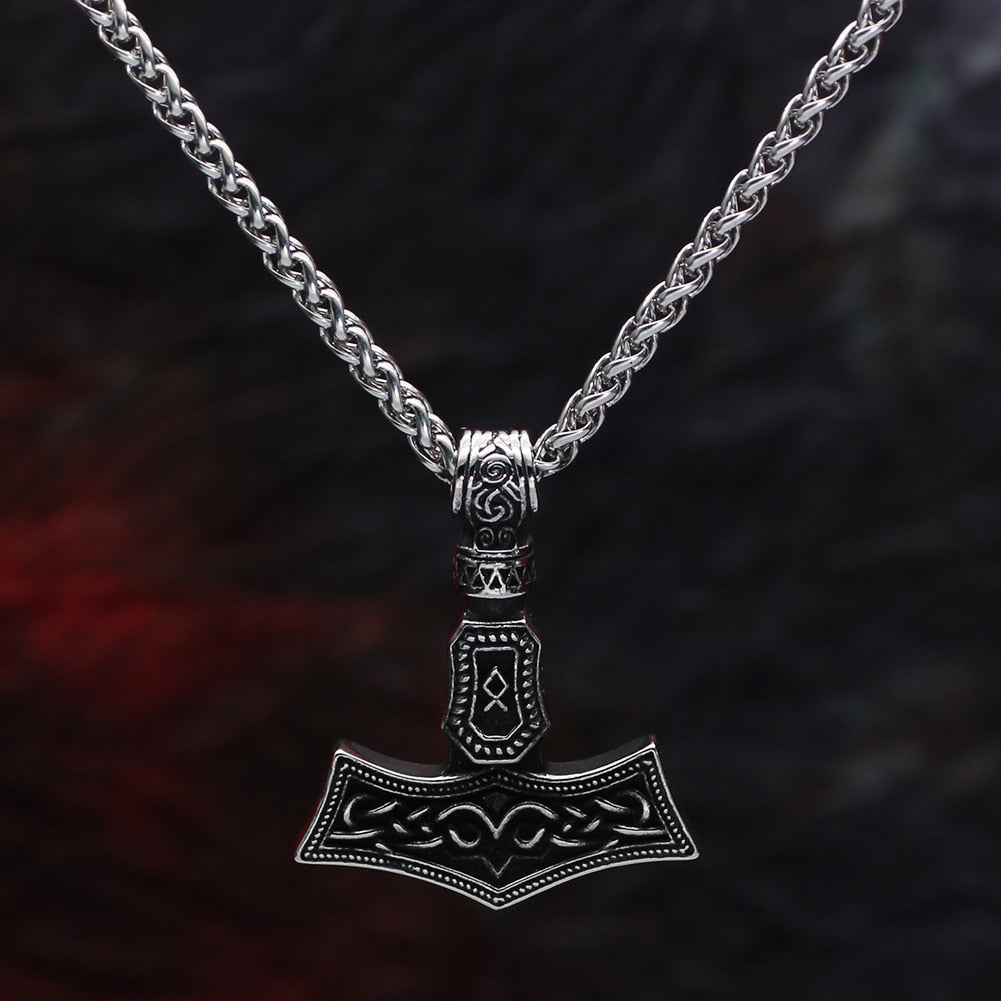
The earliest Scandinavian settlers arrived as practitioners of Norse paganism. Archaeological finds, including pagan burials and symbolic objects such as Thor’s hammer pendants, confirm the presence of pre-Christian religious practices.
However, conversion to Christianity occurred relatively quickly. By the 10th century, Norse rulers in Dublin and other settlements were participating in Christian institutions and sponsoring churches. This transformation was influenced by political necessity, interaction with local populations, and broader Scandinavian conversion processes.
Christianity among the Norse-Gaels retained regional characteristics shaped by both Gaelic and Scandinavian traditions. Stone sculpture, church patronage, and burial customs reveal this cultural synthesis throughout the Irish Sea world.
Warfare and Political Influence
Dynasties and Kingship
Norse-Gaelic rulers played major roles in the politics of medieval Ireland and Scotland. Dynasties centred in Dublin frequently intervened in Irish conflicts, forming alliances with Gaelic kings and competing for regional dominance.
One of the most prominent rulers was Gofraid ua Ímair, whose descendants dominated Dublin and surrounding territories during the 10th century. The Uí Ímair dynasty exercised influence across Ireland, Northumbria, and the Isles, demonstrating the interconnected nature of Norse-Gaelic politics.
Kingship within these societies combined Scandinavian and Gaelic traditions. Maritime mobility remained essential, enabling rulers to project power rapidly across the Irish Sea.
Relations with Ireland and Scotland
Relations between Norse-Gaelic rulers and neighbouring kingdoms fluctuated between warfare and alliance. In Ireland, Norse-Gaelic cities such as Dublin became deeply entangled in conflicts between rival Gaelic dynasties.
The Battle of Clontarf is frequently portrayed in popular culture as a decisive conflict between Irish and Viking forces. Modern historians, however, emphasise that the reality was far more complex. Both Norse-Gaelic and Gaelic forces fought on each side, reflecting the integrated political environment of the period.
In Scotland, Norse-Gaelic influence was strongest along the western seaboard and islands. Rulers of the Isles maintained relationships with both Gaelic Scottish kings and Norwegian monarchs, navigating a politically fragmented landscape.
Trade and Economic Importance
Slave Trade and Silver Economy
Trade formed the foundation of Norse-Gaelic prosperity. Dublin, in particular, became a major centre for the slave trade during the 9th and 10th centuries. Captives taken during raids and warfare were sold into wider Viking trading networks extending into Scandinavia and the Islamic world.

The Hunterston Brooch / Photo: National Museums Scotland, CC BY-SA 4.0
Silver functioned as a primary medium of wealth and exchange. Hoards discovered throughout Ireland and Scotland reveal extensive circulation of Arabic dirhams, hacked silver, jewellery, and coinage. These finds demonstrate the integration of the Irish Sea economy into broader Eurasian trade systems.
Craft production also flourished within Norse-Gaelic settlements. Archaeological evidence indicates sophisticated metalworking, textile production, woodworking, and shipbuilding industries.
Maritime Technology
The success of Norse-Gaelic societies depended heavily on maritime technology inherited from Scandinavian traditions. Longships enabled rapid movement across coastal and riverine environments, facilitating trade, warfare, and communication.
The Irish Sea became one of the most interconnected maritime zones in medieval Europe. Norse-Gaelic sailors maintained routes linking Ireland and Scotland to Iceland, Norway, England, and continental Europe.
Decline and Transformation
Norman Expansion
The political dominance of Norse-Gaelic rulers declined during the 12th century as new powers emerged. The expansion of the Anglo-Normans into Ireland after 1169 significantly altered the balance of power in the Irish Sea region.
At the same time, Norwegian royal authority over the Isles weakened. The Battle of Largs and the subsequent Treaty of Perth in 1266 marked the transfer of the Hebrides from Norwegian to Scottish control.
These developments gradually reduced the political independence of Norse-Gaelic kingdoms, though elements of their culture persisted long afterward.
Legacy in Medieval Britain and Ireland
Despite their political decline, the Norse-Gaels left a lasting impact on the medieval British Isles. Urban centres such as Dublin retained foundations established during the Viking Age, while Norse-derived place names remain widespread throughout coastal Scotland and Ireland.
Their maritime networks connected disparate regions of the North Atlantic world, facilitating trade and cultural exchange. Linguistic, artistic, and genetic evidence all point to the enduring influence of Norse-Gaelic integration.
Modern scholarship increasingly emphasises the Norse-Gaels as participants in a hybrid cultural world rather than representatives of isolated ethnic categories. Their history reflects the fluidity of identity in the medieval North Atlantic, where trade, warfare, migration, and alliance continuously reshaped society.
Conclusion
The Norse-Gaels emerged from centuries of interaction between Scandinavian settlers and Gaelic-speaking populations throughout the Irish Sea world. They developed a hybrid culture that blended Norse maritime traditions with Gaelic language, politics, and social structures.
From the trading centres of Dublin to the island kingdoms of the Hebrides and Man, Norse-Gaelic communities played a central role in shaping medieval Ireland and Scotland. Their influence extended through commerce, warfare, kingship, and cultural exchange, linking the North Atlantic world together during the Viking Age and beyond.
Although the political structures associated with the Norse-Gaels eventually declined under pressure from expanding kingdoms and Norman influence, their legacy endured in language, settlement patterns, trade networks, and regional identity. Their history demonstrates that medieval societies were rarely isolated or culturally fixed. Instead, they evolved through sustained interaction, adaptation, and exchange.
Frequently Asked Questions (FAQs)
Who were the Norse-Gaels?
The Norse-Gaels were communities of mixed Scandinavian and Gaelic cultural background that developed in Ireland, western Scotland, and the Irish Sea region during the Viking Age.
What does the term Gall-Goídil mean?
The Old Irish term Gall-Goídil generally translates as “foreign Gaels” or “Gaelic-speaking foreigners.”
Were the Norse-Gaels Vikings?
They descended partly from Viking settlers, but over time they developed a hybrid culture distinct from both Scandinavians and native Gaelic populations.
What role did Dublin play in Norse-Gaelic society?
Dublin served as a major political and commercial centre, linking the Irish Sea to wider Viking trade networks.
Did the Norse-Gaels disappear after the Viking Age?
Their political kingdoms declined, but their cultural influence remained visible in language, settlement, trade, and regional identity across Ireland and Scotland.
References
Downham, Clare. Viking Kings of Britain and Ireland.
Woolf, Alex. From Pictland to Alba 789–1070.
Ó Corráin, Donnchadh. The Vikings in Ireland and Scotland in the Ninth Century.
Forte, Angelo, Oram, Richard, and Pedersen, Frederik. Viking Empires.
Barrett, James H. Contact, Continuity, and Collapse: The Norse Colonization of the North Atlantic.
Hudson, Benjamin T. Viking Pirates and Christian Princes.
Sawyer, Peter. The Oxford Illustrated History of the Vikings.




Leave a comment
This site is protected by hCaptcha and the hCaptcha Privacy Policy and Terms of Service apply.