
The Jutes and the Formation of Early England
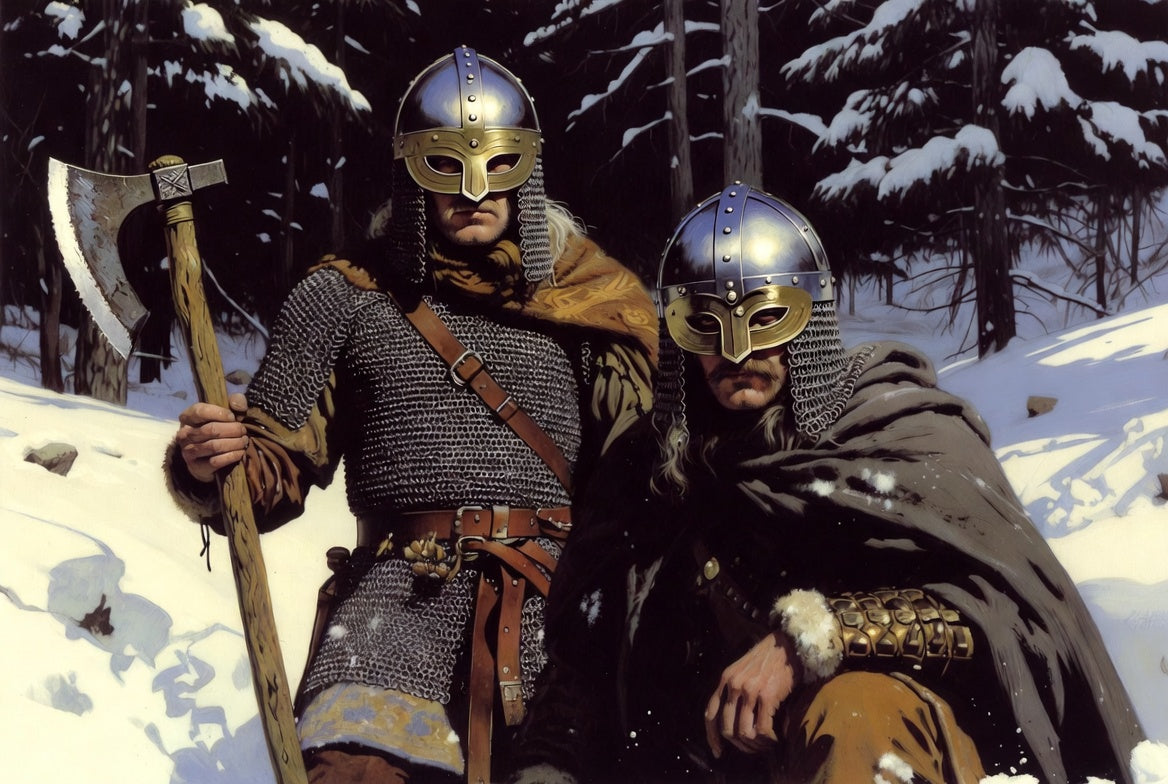
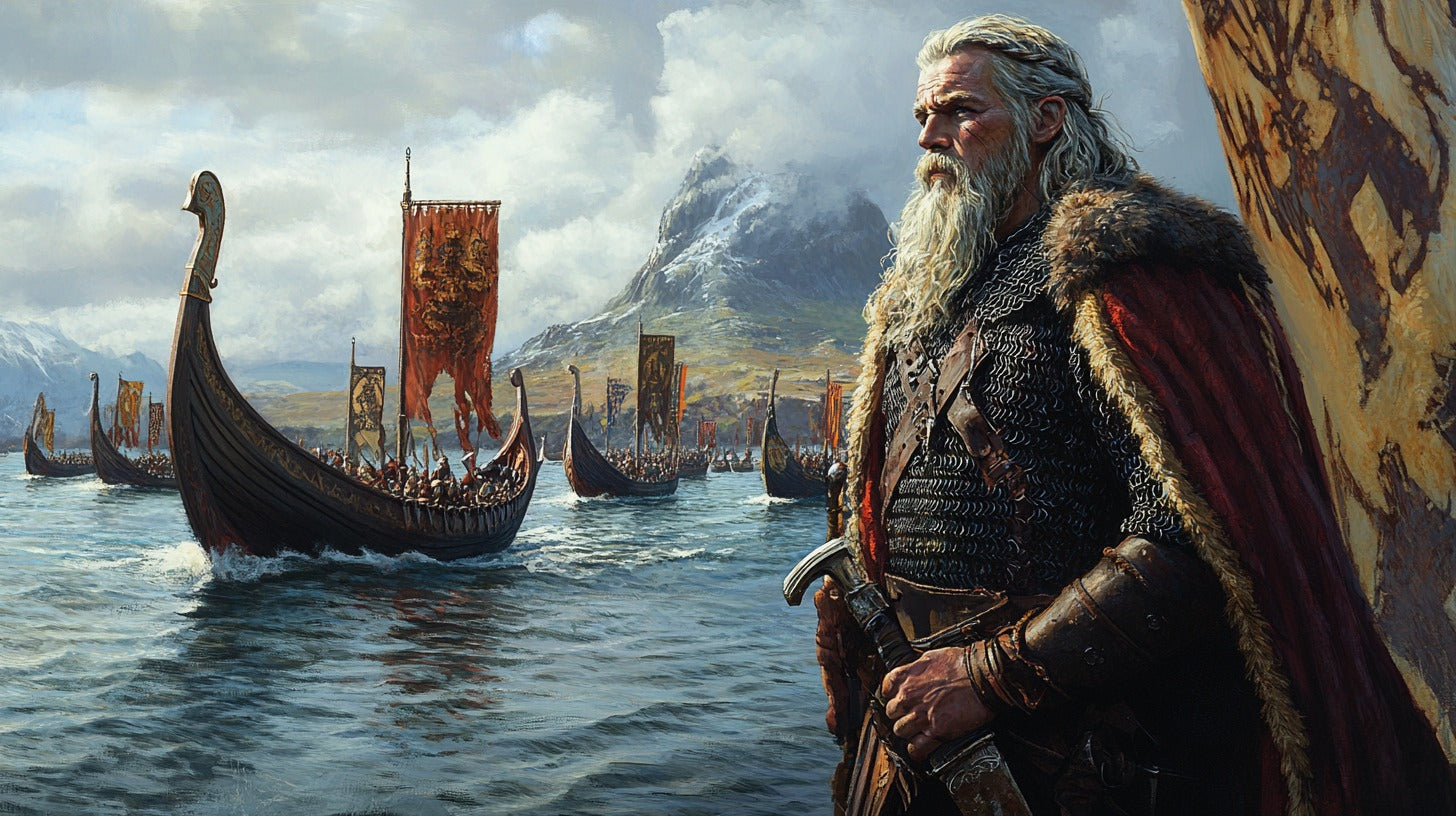
Jutes were one of the Germanic peoples traditionally associated with the settlement of post-Roman Britain during the 5th century. Alongside the Angles, Saxons, and Frisians, the Jutes formed part of the wider migration movements that reshaped Britain following the collapse of Roman administration. Although they are often overshadowed by the larger and more politically dominant Angles and Saxons, the Jutes played a major role in the early formation of kingdoms in southeastern England, particularly Kent.
Much of what historians know about the Jutes comes from later written sources, archaeology, and linguistic evidence. The surviving evidence remains limited, and modern scholarship continues to debate the exact origins, identity, and scale of Jutish migration into Britain. Nevertheless, the Jutes occupy an important place in the broader story of the Migration Period and the emergence of Anglo-Saxon England.

Angles, Saxons, Jutes in Britain year 600.
Ancient References to the Jutes
The most influential surviving account of the Jutes appears in the work of Bede, particularly his Ecclesiastical History of the English People, completed around 731 CE. Bede identified the Jutes as one of the three principal Germanic groups who settled Britain after the end of Roman rule.
According to Bede, the Jutes settled primarily in Kent, the Isle of Wight, and parts of Hampshire. He distinguished them from the Angles and Saxons while also presenting all three peoples as culturally related Germanic migrants from across the North Sea.
The Anglo-Saxon Chronicle later repeated and expanded these traditions, especially through stories connected to the legendary figures Hengest and Horsa. However, like many medieval chronicles, these accounts combined history, oral tradition, genealogy, and political mythmaking.
Jutland and Southern Scandinavia
The name “Jute” has long been connected to the Jutland Peninsula in present-day Denmark. This association appears both linguistically and geographically plausible, and many historians believe the Jutes originated somewhere in southern Scandinavia or the northern Danish peninsula.
Archaeological evidence reveals strong cultural links between Jutland, Frisia, northern Germany, and early Anglo-Saxon England during Late Antiquity. Burial styles, weapon forms, jewellery, and settlement structures demonstrate extensive interaction across the North Sea world.
However, identifying precise tribal boundaries remains difficult. Early Germanic societies were fluid political and cultural networks rather than rigid nation-states. The people later remembered as “Jutes” likely formed part of a wider Scandinavian and North Sea cultural zone closely related to neighbouring Angles, Danes, Saxons, and Frisians.
The Debate Over Jutish Identity
Modern historians continue debating whether the Jutes represented a clearly separate tribe or whether the term later became a convenient label for groups migrating from southern Scandinavia.
Some scholars argue that the Jutes may have been politically absorbed into the expanding Danish sphere before the Viking Age, contributing to why they largely disappear from continental historical sources after the early medieval period. Others suggest that “Jute” may have referred to a regional identity rather than a sharply distinct ethnic group.
The limited surviving evidence prevents definitive conclusions. Nevertheless, both written and archaeological evidence confirm strong connections between southeastern England and the Danish-Jutland region during the Migration Period.

The Migration to Britain
Roman Britain and Political Collapse
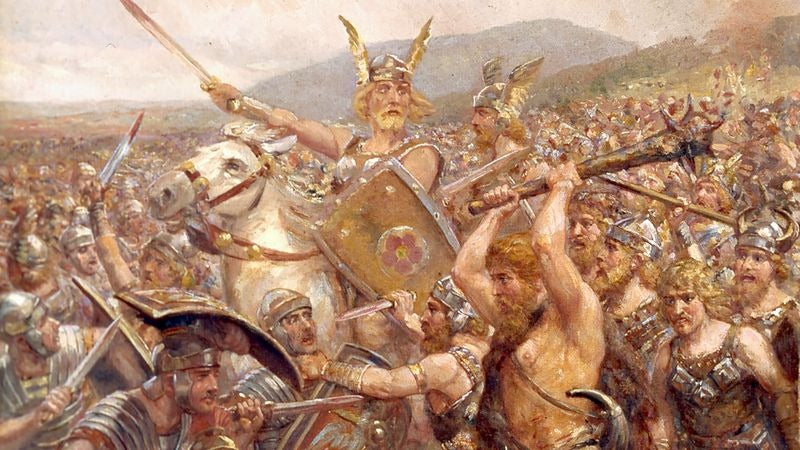
The migration of Germanic groups into Britain occurred during the collapse of Roman authority in the western provinces during the 5th century. Roman military administration weakened significantly after 410 CE, leaving Britain politically fragmented and vulnerable to external raids and internal conflict.
In this unstable environment, Germanic mercenaries were initially hired by local Romano-British rulers. Over time, some of these groups established permanent settlements and independent political control.
The migration process was gradual rather than a single invasion. Archaeological evidence indicates waves of settlement extending across several generations.
Hengest and Horsa in Tradition
The best-known migration narrative connected to the Jutes involves the legendary brothers Hengest and Horsa. According to traditions preserved in the Anglo-Saxon Chronicle and earlier sources such as Bede, the brothers were invited to Britain as mercenary leaders before eventually establishing political dominance in Kent.
The historical accuracy of these accounts remains uncertain. Most historians believe the stories preserve fragments of genuine migration traditions while also containing substantial legendary material.

The names themselves appear symbolically significant. “Hengest” means “stallion” in Old English, while “Horsa” means “horse,” suggesting possible mythological or heroic associations.
Despite these uncertainties, the traditions remain important because they reflect how early medieval English societies understood their own origins and relationships with continental Germanic peoples.
Settlement in Kent, Wight, and Hampshire
Kent became the strongest centre of Jutish settlement in Britain. Archaeological evidence from cemeteries, grave goods, and early settlements demonstrates strong continental influences distinct from some neighbouring Anglo-Saxon regions.
The Isle of Wight and parts of southern Hampshire were also associated with Jutish populations according to Bede. These regions maintained important maritime connections across the English Channel and North Sea.
Kent’s geographic position made it one of the most internationally connected regions of early medieval England. Trade with Frankish Gaul flourished, bringing wealth and continental cultural influence into the kingdom.
The Jutes in Early Medieval England
The Kingdom of Kent
The Kingdom of Kent emerged as one of the earliest and wealthiest Anglo-Saxon kingdoms. Its rulers established extensive diplomatic and commercial relations with the Frankish kingdoms across the Channel.
Kentish kings exercised considerable influence during the 6th and 7th centuries. The kingdom’s prosperity stemmed partly from trade routes linking Britain to continental Europe.
The Kentish royal dynasty also played a central role in the Christianization of Anglo-Saxon England.
Law, Trade, and Frankish Connections
One of the earliest surviving Germanic legal codes in England comes from Kent during the reign of King Æthelberht in the early 7th century. The laws reveal a highly organized society shaped by both Germanic custom and contact with Christian Europe.
Frankish luxury goods discovered in Kentish graves demonstrate the kingdom’s international connections. These findings distinguish Kent archaeologically from many other early Anglo-Saxon regions.
Trade networks across the Channel linked Kent to wider economic systems operating throughout post-Roman western Europe.

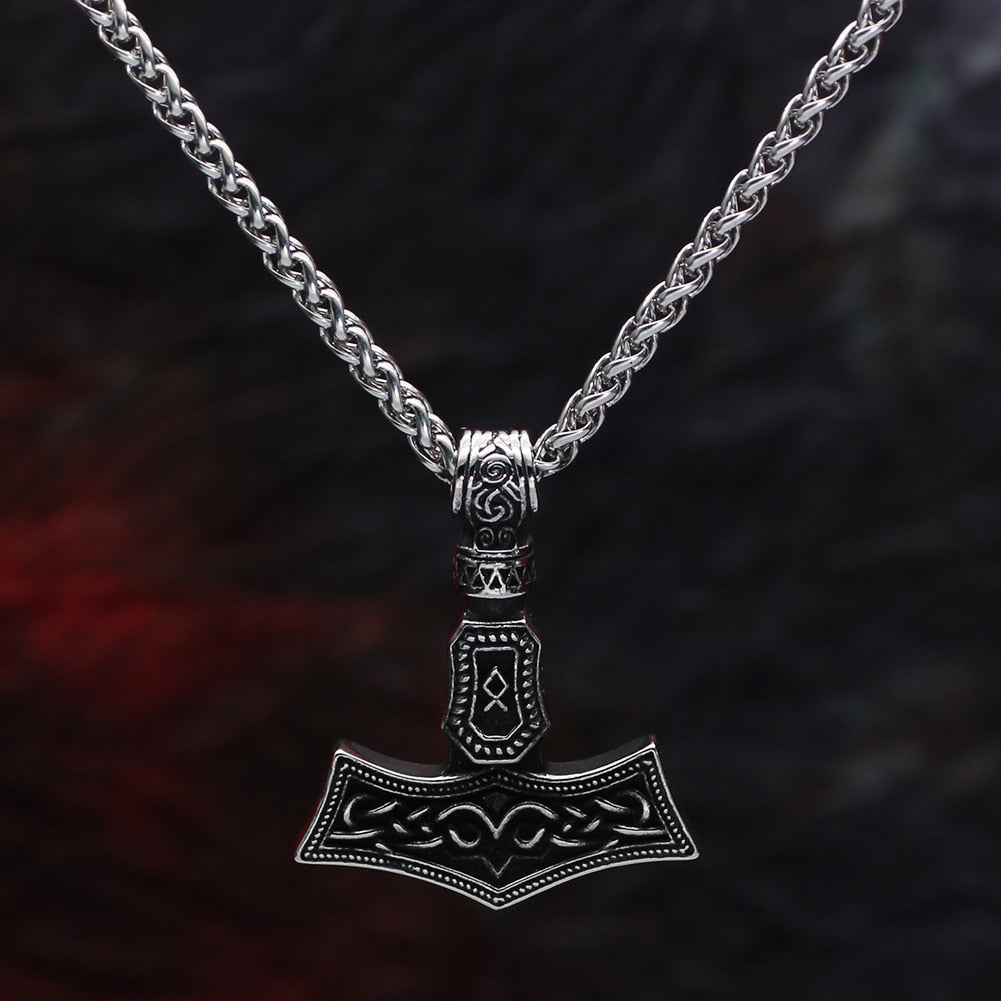
Gungnir and Mjölnir amulets discovered in Gilton, Kent.
Christianity and Conversion
In 597 CE, Augustine of Canterbury arrived in Kent as part of the Gregorian mission sent by Pope Gregory I.
King Æthelberht of Kent converted to Christianity shortly afterward, making Kent the centre of early English Christianity. Canterbury became one of the most important ecclesiastical centres in England.
The conversion of Kent illustrates how the Jutish kingdom functioned as a bridge between continental Europe and the emerging Anglo-Saxon world.
Language and Culture
Old English and Jutish Speech
Very little direct evidence survives of any distinct Jutish dialect. Most linguistic evidence suggests that the Jutes spoke a form of early West Germanic closely related to the dialects of the Angles and Saxons.
Old English itself developed from the interaction of these related Germanic dialects after settlement in Britain. But, because the languages were extremely similar, distinguishing specifically “Jutish” linguistic features remains difficult for modern scholars.
Burial Customs and Archaeology
Archaeological evidence from Kentish cemeteries reveals distinctive burial practices during the 5th and 6th centuries. Rich grave goods, imported Frankish items, and continental artistic influences appear frequently.
These burial traditions demonstrate both Germanic cultural continuity and active participation in wider North Sea and Frankish trade networks.
Scandinavian Connections
The Jutes maintained strong cultural and geographic ties to southern Scandinavia. Maritime movement across the North Sea connected Britain to Denmark, Frisia, and northern Germany throughout the early medieval period. These links later became even more significant during the Viking Age, when Danish influence expanded across England.
The Jutes and the Viking Age
Kent During the Viking Age
By the Viking Age, distinct Jutish political identity had largely disappeared within the broader Anglo-Saxon kingdoms of England. However, southeastern England remained deeply connected to the Scandinavian world.
Kent experienced Viking raids, Danish political influence, and integration into the wider Scandinavian sphere during the 9th and 10th centuries.
Shared Language and Ancestry
Old English and Old Norse remained closely related languages during the Viking Age. Anglo-Saxons and Scandinavians could often understand one another to a significant degree, especially in regions shaped by centuries of earlier North Sea interaction.
Modern genetic studies similarly demonstrate substantial overlap between populations in England, Denmark, and northern Germany. Because the Angles, Jutes, and Danes originated from closely related populations, distinguishing precise genetic contributions remains difficult.
In many respects, Viking-Age conflict between England and Denmark unfolded within a broader family of closely related Germanic peoples.
Historiography and Modern Scholarship
Bede and the Anglo-Saxon Tradition
Much of the traditional understanding of the Jutes derives from Bede and later medieval chroniclers. These writers shaped the narrative framework through which the origins of England were remembered.
However, medieval authors often simplified complex migration processes into neat tribal categories and genealogical traditions.
Archaeological Reassessment
Modern archaeology increasingly emphasizes cultural blending, trade networks, and gradual migration rather than simple ethnic replacement.
The Jutes therefore remain historically important not because they formed a massive isolated tribe, but because they represent part of the broader transformation that produced early medieval England.
The Legacy of the Jutes
Although the Jutes eventually disappeared as a distinct political identity, their influence endured through the Kingdom of Kent, early English Christianity, legal traditions, and the wider formation of Anglo-Saxon England.
Their history also illustrates the interconnected nature of the North Sea world during Late Antiquity and the early medieval period. Britain, Denmark, Frisia, and northern Germany remained tied together through migration, trade, warfare, and shared cultural traditions long after the collapse of Roman rule.
Conclusion
The Jutes occupy a complex but important place in the history of early medieval Europe. Emerging from the Germanic world of southern Scandinavia and the North Sea coast, they participated in the migration movements that transformed Britain after the end of Roman administration.
Although surviving evidence remains limited, historical traditions, archaeology, and linguistic evidence all point toward strong connections between the Jutes, the wider Scandinavian world, and the emerging Anglo-Saxon kingdoms of England. Their settlement in Kent helped create one of the earliest and most internationally connected kingdoms in post-Roman Britain.
The history of the Jutes also reveals the fluid nature of identity during the Migration Period. Rather than existing as isolated nations in the modern sense, Germanic peoples such as the Jutes, Angles, Saxons, and Danes formed overlapping cultural networks linked across the North Sea. Their movements and interactions helped shape the political, linguistic, and cultural foundations of medieval England.
Frequently Asked Questions (FAQs)
Who were the Jutes?
The Jutes were a Germanic people traditionally associated with the settlement of Kent, the Isle of Wight, and parts of Hampshire during the 5th century.
Where did the Jutes come from?
Most historians connect the Jutes to the Jutland Peninsula in present-day Denmark, although the exact nature of their identity remains debated.
Were the Jutes different from the Angles and Saxons?
Yes, medieval sources treated them as separate groups, though they were closely related culturally and linguistically.
What role did the Jutes play in England?
The Jutes were particularly important in the formation of the Kingdom of Kent, one of the earliest and wealthiest Anglo-Saxon kingdoms.
What happened to the Jutes?
Over time, the Jutes were absorbed into the broader Anglo-Saxon population, and their separate identity gradually disappeared.
References
Ecclesiastical History of the English People
Anglo-Saxon Chronicle
Barbara Yorke, Kings and Kingdoms of Early Anglo-Saxon England
Nicholas Higham, The English Conquest
Peter Hunter Blair, Roman Britain and Early England
James Campbell, The Anglo-Saxons
John Hines, The Anglo-Saxons from the Migration Period to the Eighth Century
Guy Halsall, Barbarian Migrations and the Roman West






Leave a comment
This site is protected by hCaptcha and the hCaptcha Privacy Policy and Terms of Service apply.