
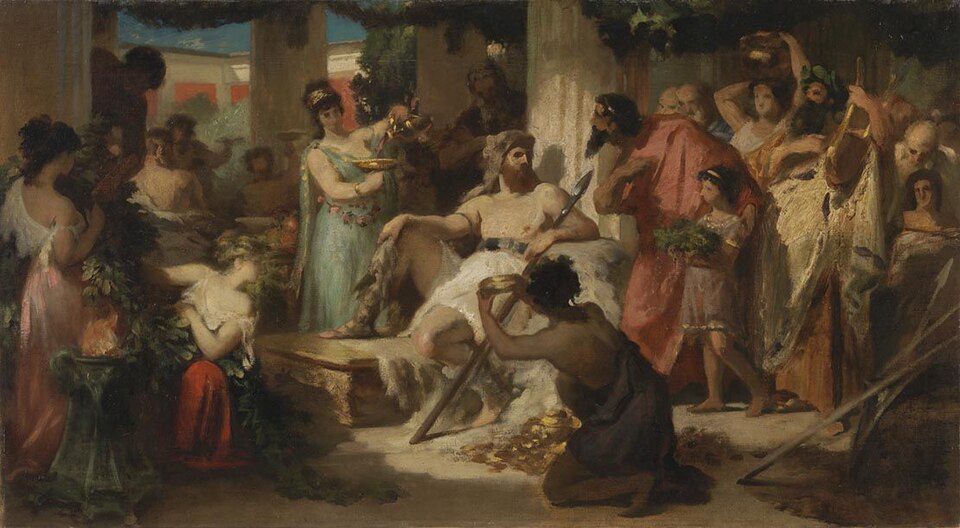
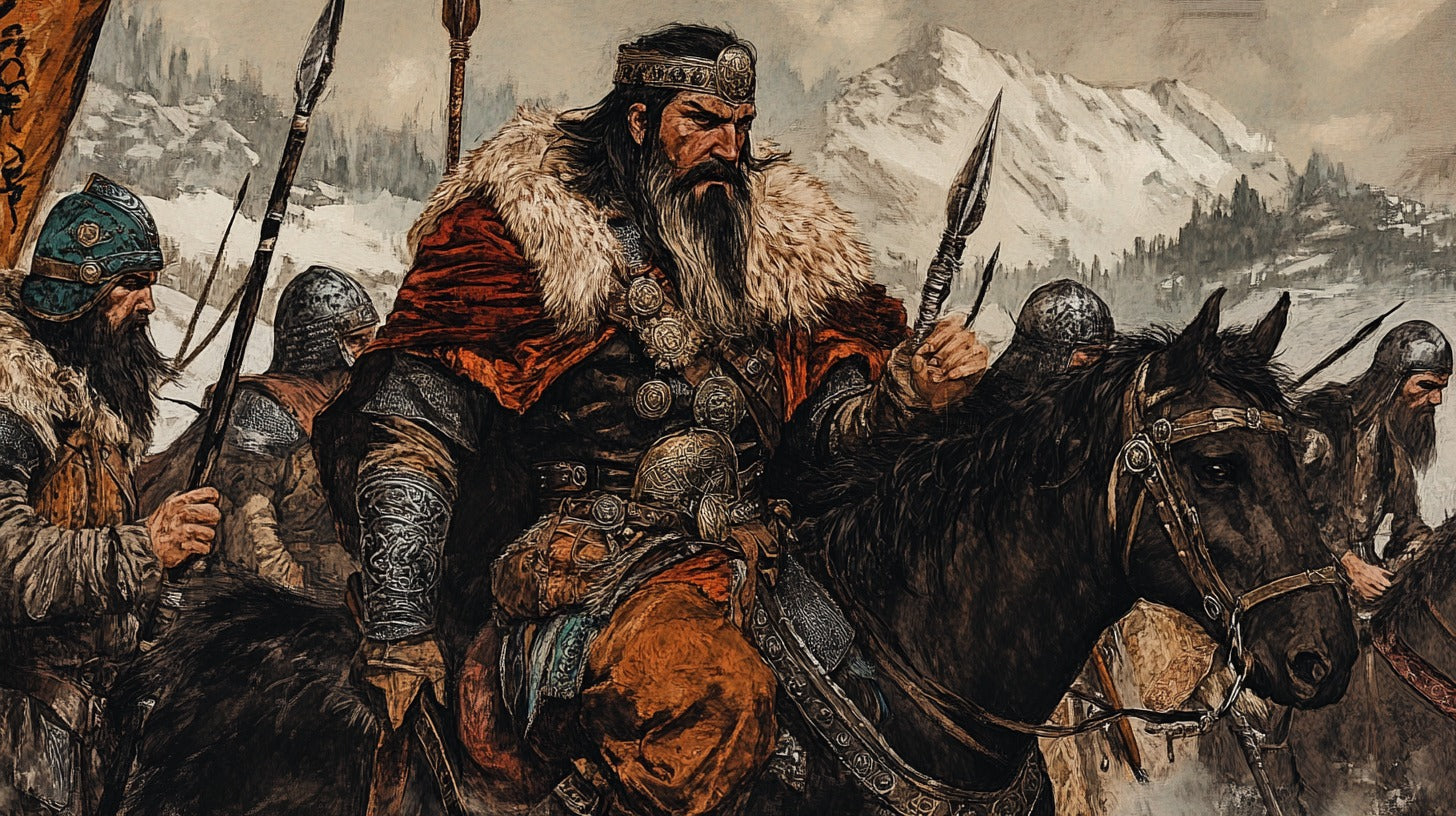
King Alaric I: Visigothic Leader and Rome's Conqueror
Alaric I was a Gothic leader who became one of the most consequential figures of Late Antiquity. As king of the Visigoths, he led the first successful sack of the city of Rome in over seven centuries in 410 CE, an event that marked a profound symbolic turning point in the history of the Western Roman Empire.
The Goths and the Late Roman World
The career of Alaric I must be understood within the broader context of Roman–Gothic relations during the late fourth and early fifth centuries CE. The Goths were not a single unified people but a collection of related groups who had entered into varying degrees of military and political engagement with the Roman Empire. Many served as federate troops, while others remained outside imperial control along the Danube frontier.
The Roman Empire itself was undergoing structural strain during this period, with shifting power centres between East and West and increasing reliance on non-Roman military leaders. It is within this environment of cooperation and tension that Alaric emerged.
Early Life and Rise to Power
Alaric I first appears in historical sources as a leader within the Gothic forces that fought at the Battle of Adrianople in 378 CE, where the Roman emperor Valens was defeated and killed. While Alaric’s exact role in this battle remains unclear, it marked a turning point in Gothic–Roman relations and elevated Gothic military power within imperial politics.
The Gothic Federate System
Following Adrianople, many Gothic groups were settled within the Empire under federate agreements, supplying troops in exchange for land and subsidies. Alaric rose to prominence within this system, eventually becoming king of the Visigoths. His authority was not purely hereditary but appears to have been shaped by military leadership and the support of Gothic nobles.
Conflict with the Western Roman Empire
Relations between Alaric and the Western Roman authorities deteriorated over issues of land settlement, military command, and payment for Gothic service. Negotiations with the imperial court in Ravenna repeatedly broke down, leading to escalating conflict.
March on Italy
Alaric led his forces into Italy on multiple occasions in the early fifth century. These campaigns were not immediately aimed at destroying Rome but at pressuring the imperial government to fulfil agreements regarding Gothic settlement and status within the Empire. His movements reflect both military strategy and political negotiation within the fragmented structure of late Roman governance.
The Sack of Rome in 410 CE
In August 410 CE, Alaric’s forces entered Rome and sacked the city. It was the first time in approximately 800 years that Rome had been taken by a foreign enemy. However, contemporary accounts suggest that the sack was limited in duration and scope compared to later medieval interpretations.
The event had enormous symbolic significance. Although Rome was no longer the administrative capital of the Western Empire, it remained the ideological centre of Roman identity. The sack demonstrated the vulnerability of the imperial system and marked a psychological turning point for contemporaries across the Mediterranean world.
Political and Symbolic Impact
The sack of Rome did not immediately end the Western Roman Empire, but it deeply affected perceptions of imperial authority. Christian writers such as Augustine of Hippo interpreted the event within theological frameworks, most famously in The City of God, where he argued that earthly cities were ultimately transient.
From a political perspective, the sack reinforced the growing reality that Gothic groups were no longer peripheral enemies but central actors within the Roman world. Alaric himself did not seek to destroy Rome as a concept but to secure recognition and settlement for his people within the imperial system.
Death and Legacy
Alaric died shortly after the sack of Rome in 410 CE while his forces were still in southern Italy. According to later tradition, he was buried beneath the Busento River, which was temporarily diverted to conceal his tomb, though the historicity of this account is uncertain.
After his death, leadership of the Visigoths passed to his successors, who eventually established a stable kingdom in Gaul and Hispania. Alaric’s legacy thus extended beyond his lifetime, shaping the emergence of post-Roman political structures in Western Europe.
Scholarly Interpretations
Modern historians generally view Alaric not as a destroyer of Rome but as a product of the late Roman system itself. He operated within imperial frameworks of negotiation, federate service, and political legitimacy. Scholars such as Peter Heather and Herwig Wolfram emphasise the integration of Gothic groups into Roman structures prior to the collapse of centralized authority in the West.
Other interpretations focus on the symbolic nature of his actions, arguing that the sack of Rome represents less a military conquest and more a breakdown of political trust between Rome and its federate allies.
Conclusion
Alaric I stands at the intersection of Roman and Gothic history, embodying the complexities of Late Antiquity. His sack of Rome in 410 CE symbolised the fragility of imperial power, yet his career also reflects deep entanglement between Roman institutions and Gothic leadership. Far from being an external destroyer, Alaric was a figure shaped by the Roman world he challenged, and his legacy contributed to the transformation of the Western Empire into the successor kingdoms of medieval Europe.
Frequently Asked Questions (FAQs)
Who was Alaric I?
He was a king of the Visigoths who led the sack of Rome in 410 CE.
Did Alaric destroy the Roman Empire?
No, but his actions highlighted its political and military weakness.
Why did Alaric attack Rome?
Primarily to pressure the Roman government into granting Gothic settlement rights.
What happened after the sack of Rome?
The Western Roman Empire continued but weakened further over time.
Where was Alaric buried?
Tradition says he was buried under the Busento River, though this is uncertain.
References
The History of the Decline and Fall of the Roman Empire
Peter Heather, The Fall of the Roman Empire
Herwig Wolfram, History of the Goths
Augustine of Hippo, The City of God
Guy Halsall, Barbarian Migrations and the Roman West
Walter Goffart, Barbarian Tides









Leave a comment
This site is protected by hCaptcha and the hCaptcha Privacy Policy and Terms of Service apply.